Recommendation engine
Partner console · QR hosting
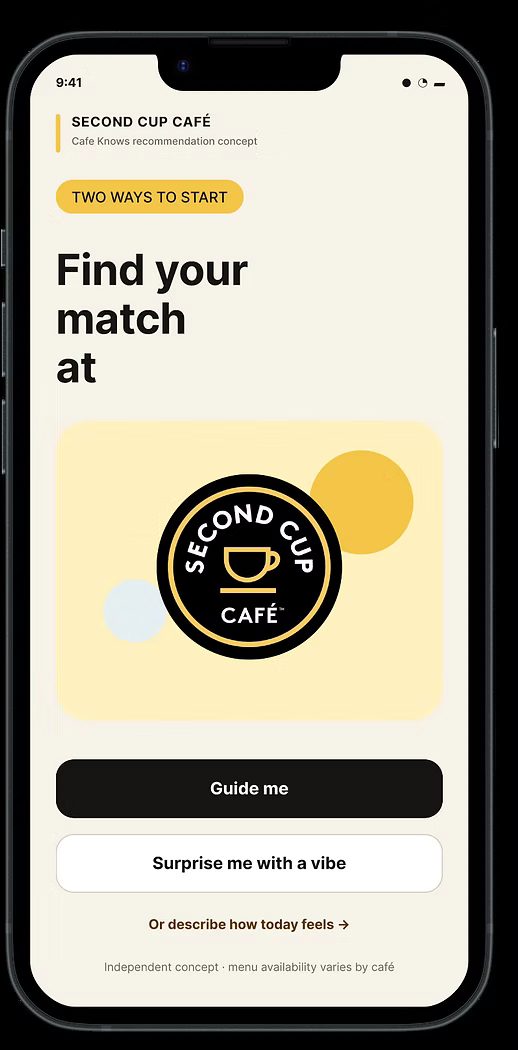
AI product · Recommendation · Mobile web
Cafe Knows
An explainable drink-and-food recommendation layer for cafés. It adapts to each café’s menu, pricing, availability, dietary information, and brand rules—then helps customers decide through a short Guided flow or a mood-based Vibe path.
Try the prototype01 · Pain point
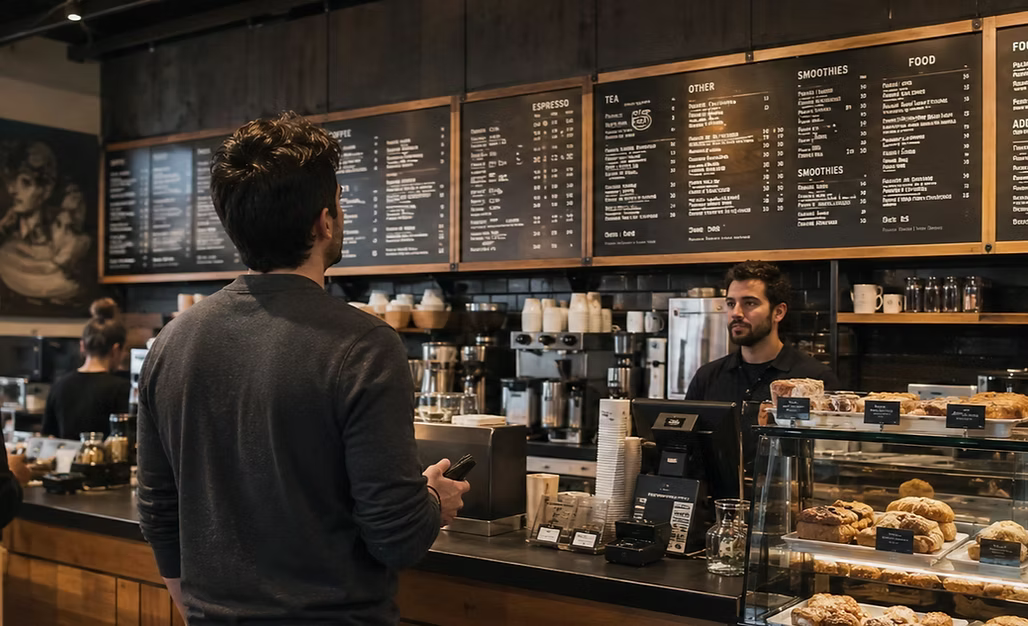
Choosing from a menu can become a public performance.
When a line is moving and a barista is waiting, people often fall back on a familiar drink—even when they want to try something new. Dense menus, unfamiliar customization language, and price uncertainty make discovery harder at exactly the moment it should feel enjoyable.
02 · Business model
One layer, configured by every café.
Cafe Knows sits between partner cafés and their customers. The café keeps control of the facts; the customer gets a recommendation grounded only in what that store can serve.
Menu truth · store rules
Brand and location control
No app required
Decide before ordering
03 · Product logic
Useful AI begins with honest boundaries.
The concept demonstrates explainable matching—not a deployed machine-learning model. A transparent rules-and-scoring MVP is enough to test whether the experience is useful.
Validate menu
Map real items, customizations, cautions, and store-specific rules.
Capture intent
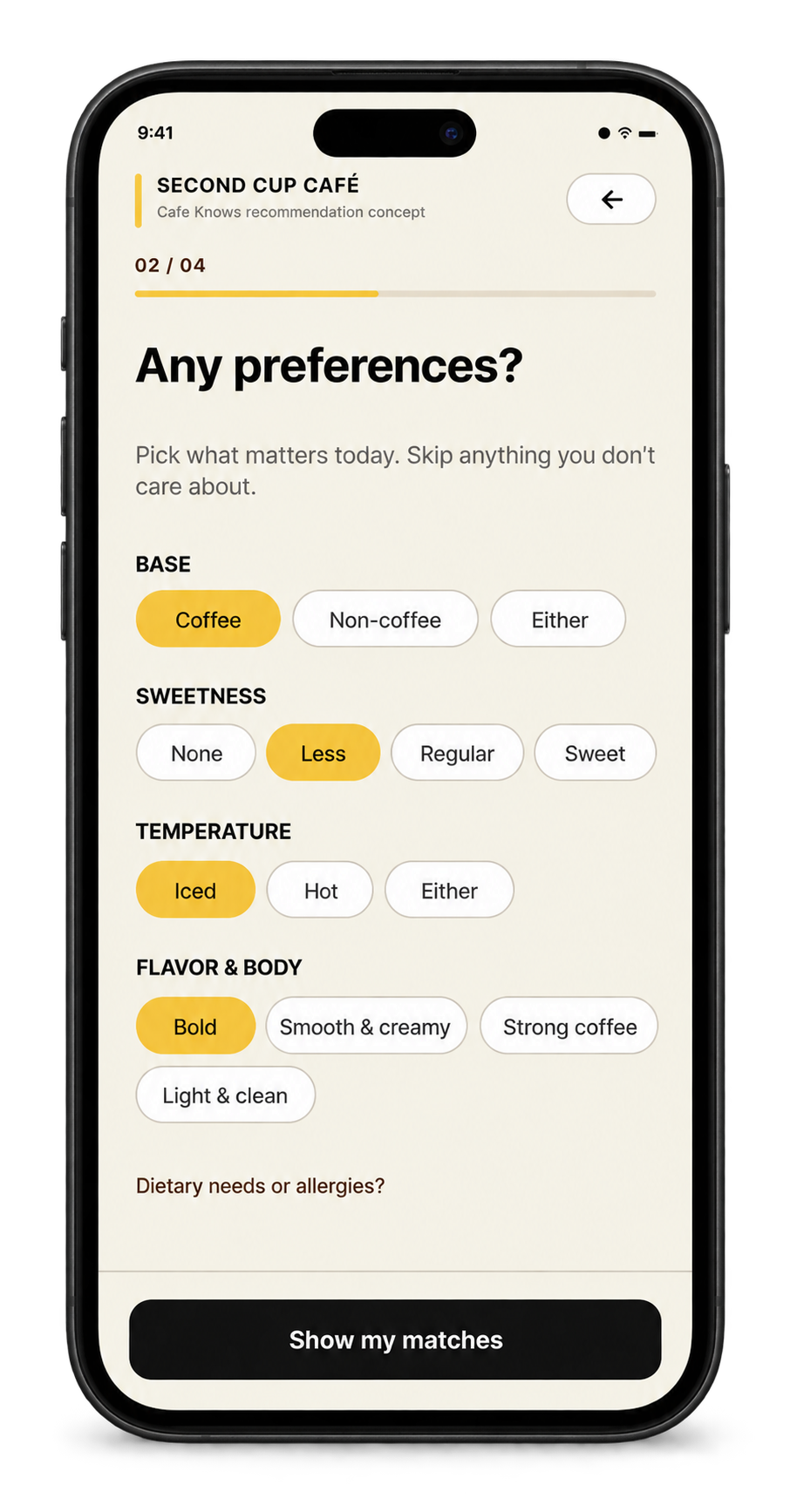
Collect visit context, taste, and hard constraints in one short session.
Filter + score
Remove conflicts, then weight menu fit and data confidence.
Diversify top 3
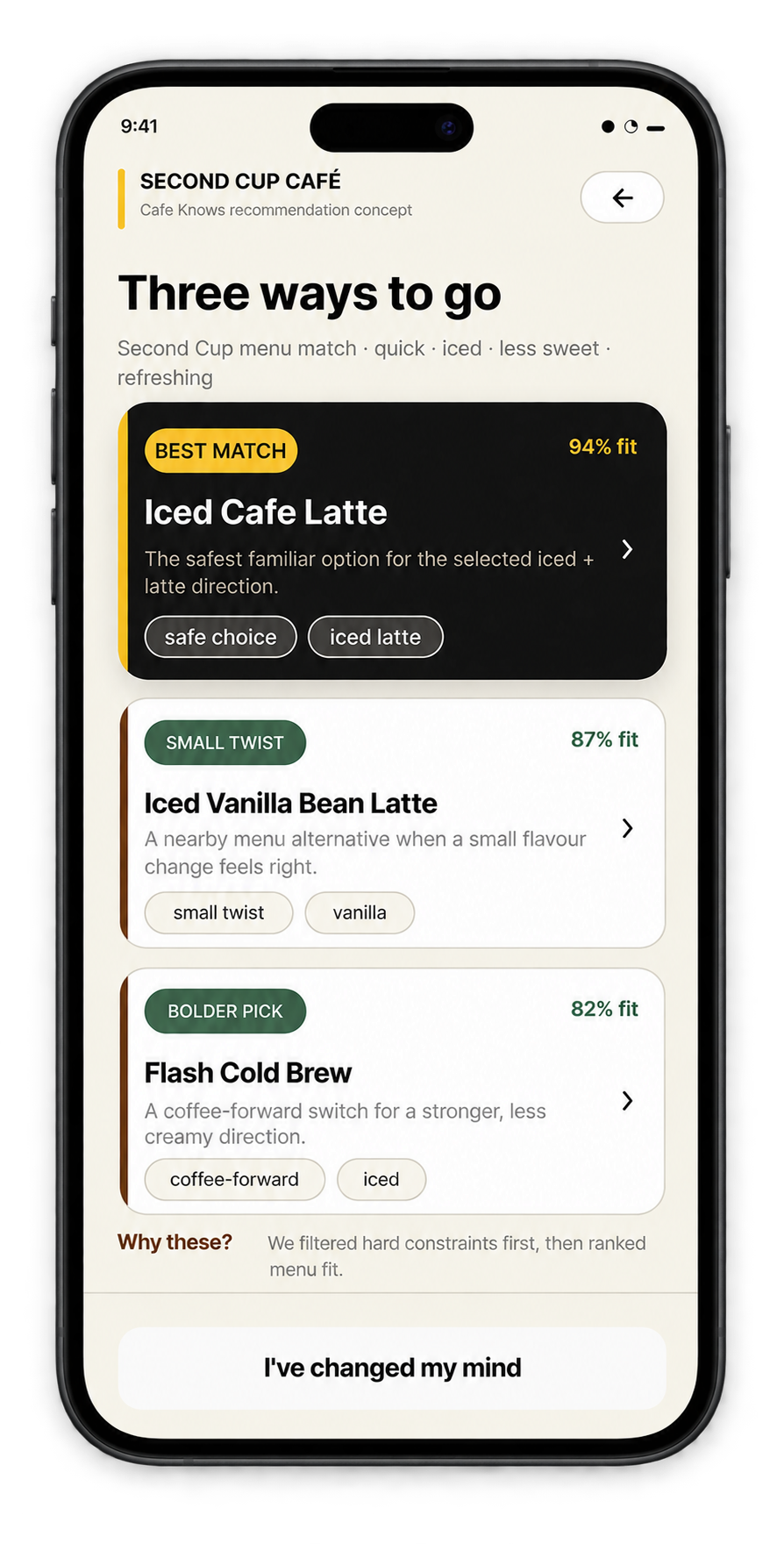
Return a safe choice, a small twist, and a bolder alternative.
MVP scoring modelFit = intent + menu attributes + store rules + confidence
Hard constraints are filters, not weighted preferences. Uncertain menu data must be validated before publishing.
04 · Customer experience
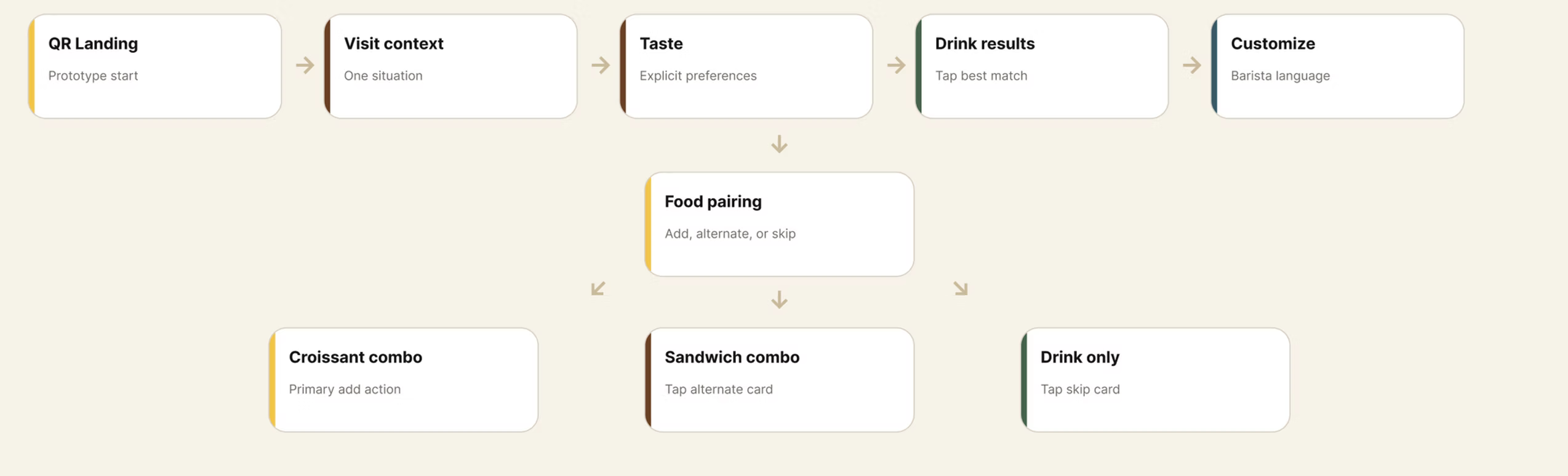
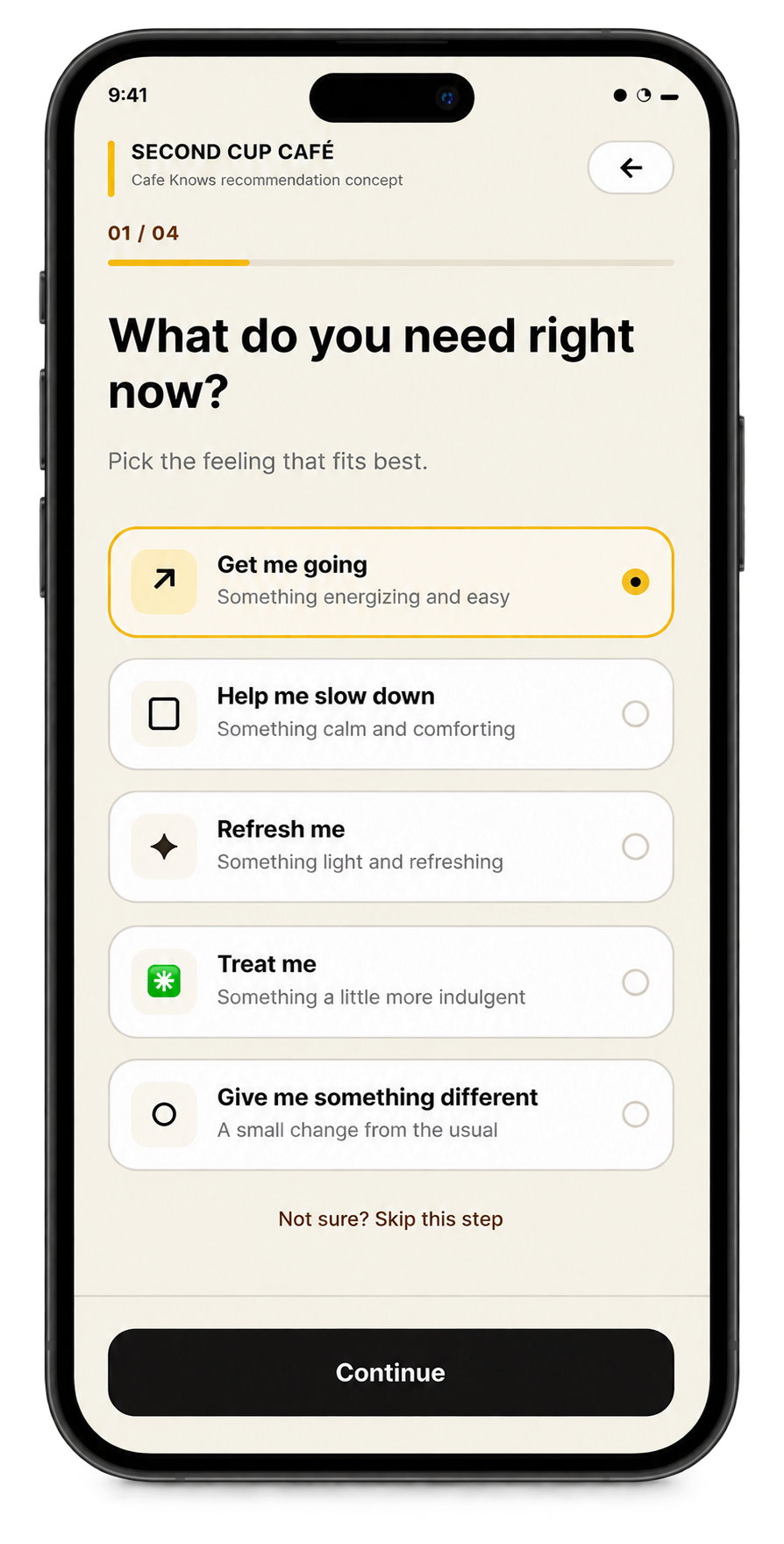
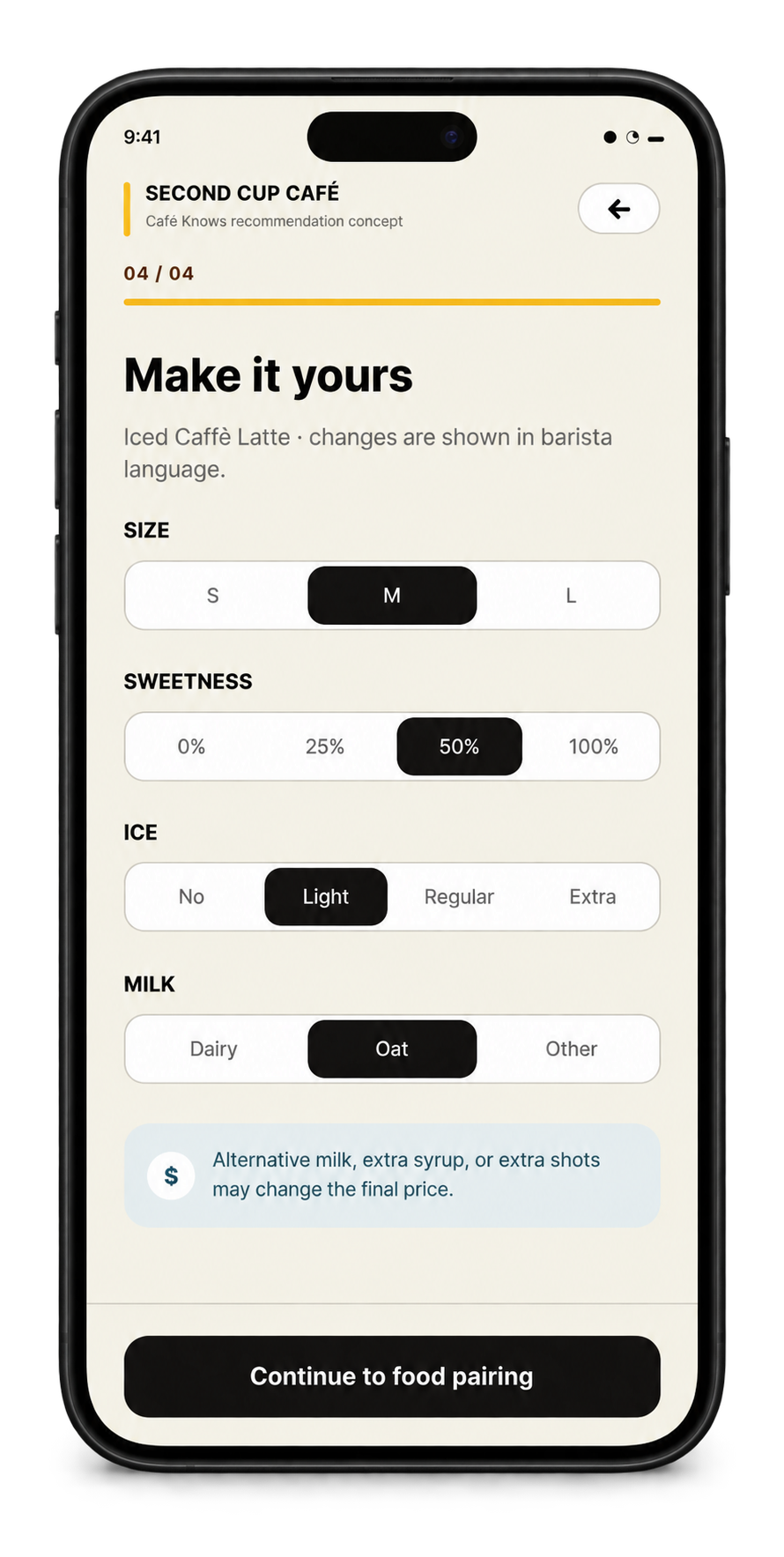
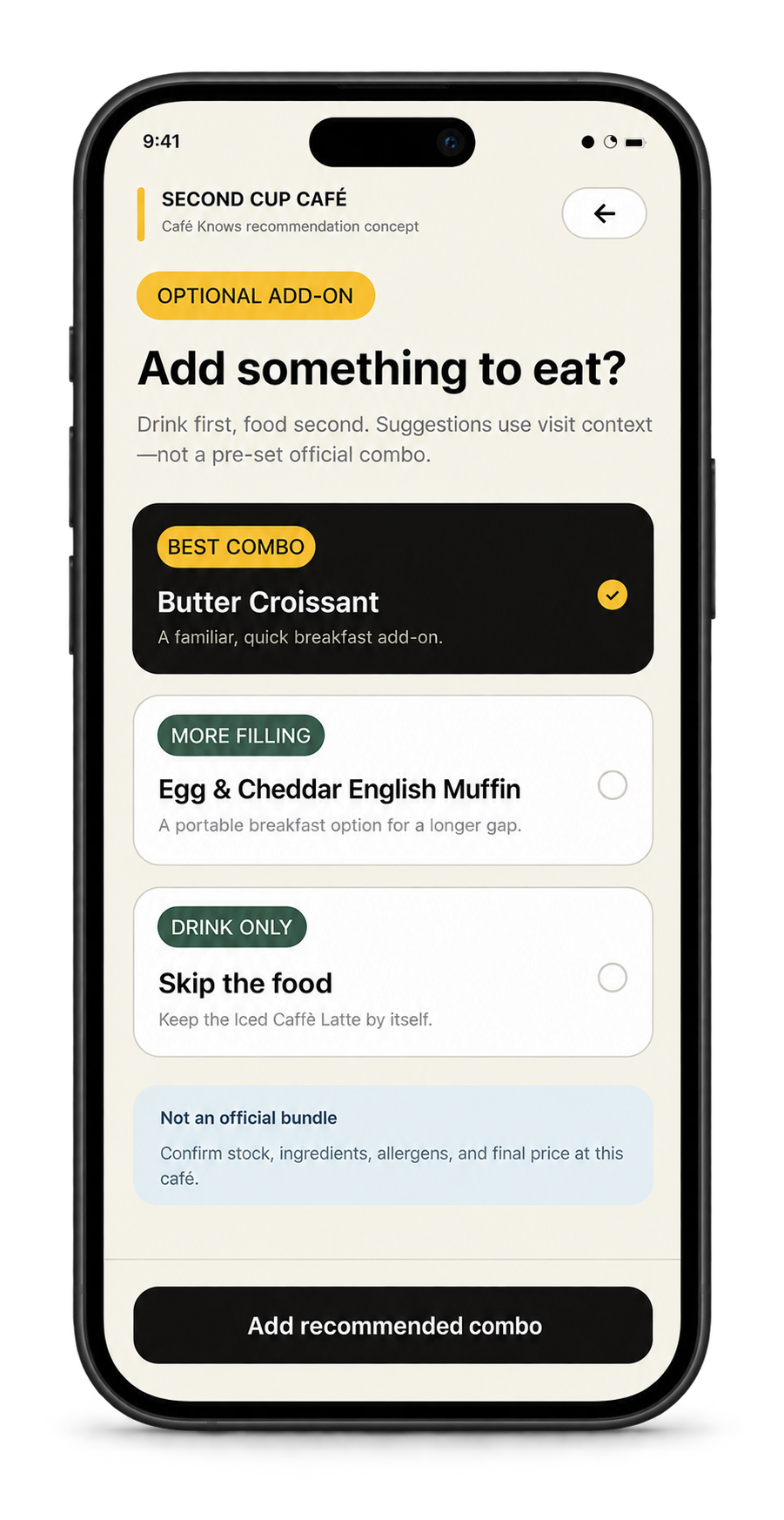
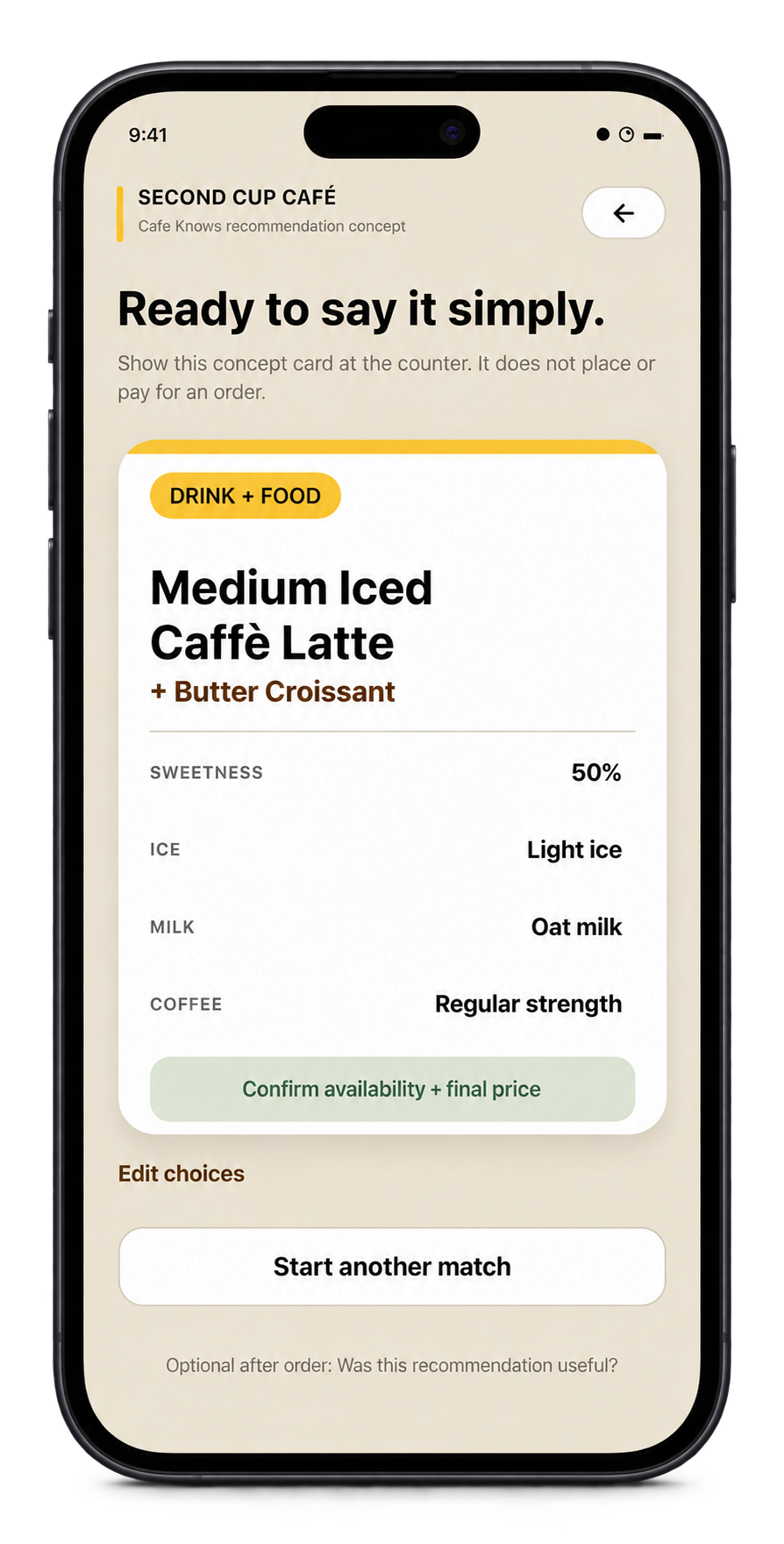
Guided turns a vague want into one clear order.
The structure stays short and explicit: context, taste, recommendation, customization, and an optional food pairing.
05 · Data boundary
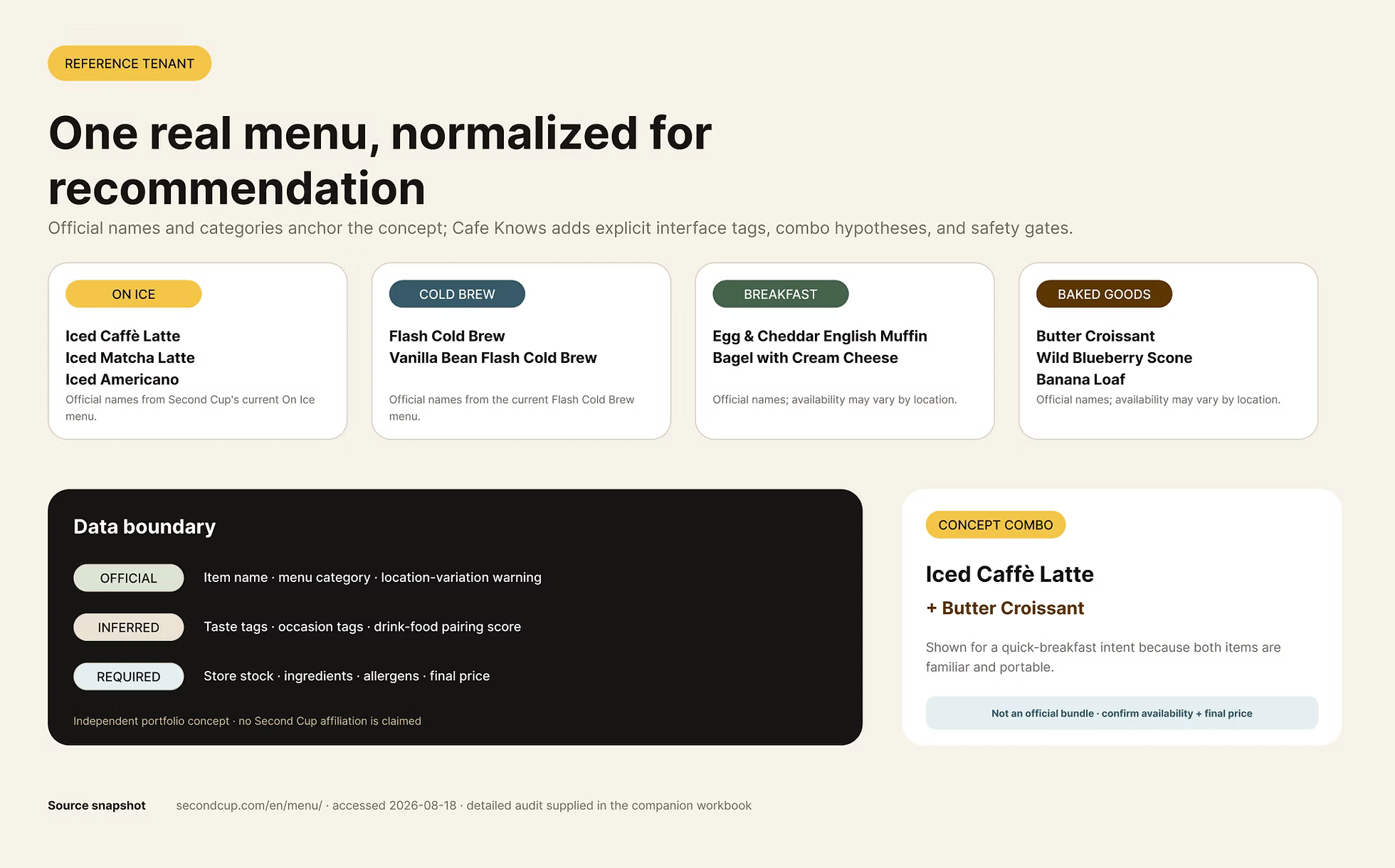
A feeling can start the journey. The menu still sets the truth.
Expressive language makes discovery feel lighter, but it never replaces hard constraints. Official menu facts, inferred taste signals, and store-validated requirements remain visibly separate before any recommendation is ranked.
06 · System behavior
Transparent by design.
1 / Capture & filter
Capture context, taste, or mood. Apply caffeine, temperature, milk, dietary, allergy, and store-availability boundaries before ranking.
2 / Score & diversify
Score what remains across taste, texture, context, and preparation fit—then return three meaningfully different options.
3 / Explain & translate
Explain why each result fits, lower confidence when data is incomplete, and translate the selection into a barista-readable order card.
07 · Validation plan
The next milestone is evidence—not another polished screen.
Five moderated prototype sessions would test whether people can choose beyond their default, understand the explanation, customize the drink, and communicate the result to a mock barista.
Measure
Time to decision · perceived pressure · confidence · explanation comprehension · selection diversity · order-card clarity
08 · Reflection
The harder design problem was not recommendation. It was trust.
The concept became stronger when expressive inputs such as mood were separated from operational constraints such as allergens and availability. The system can feel personal without claiming to know more than it does.
Try the clickable prototype Independent portfolio concept. Second Cup is used only as a public-menu reference tenant; this work was not commissioned or endorsed by the company.