Softer light
Reduce the contrast between a bright phone screen and a dark bedroom.
Connected lighting · Industrial design · 2018
Second prize · Philips Intelligent Residential Lighting Campus Design CompetitionA bedside lamp that turns the familiar act of lifting a phone into a softer transition at night.
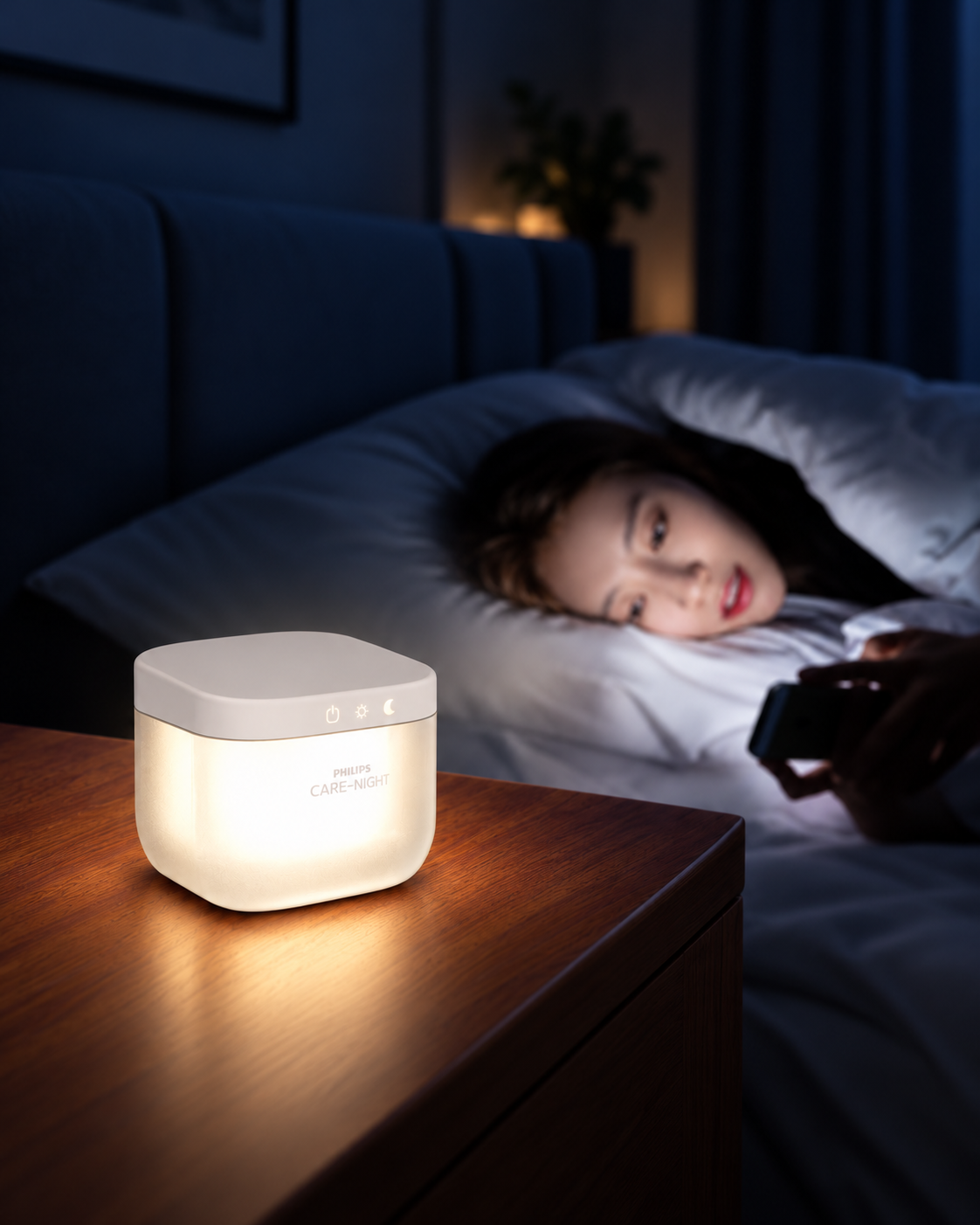
01 · The moment
Before sleep, people charge their phone, turn off the room light, and settle down. When a message arrives, reaching for the phone is easier than reaching for a lamp—leaving the bright screen to become the only light in the room.
02 · User scenario
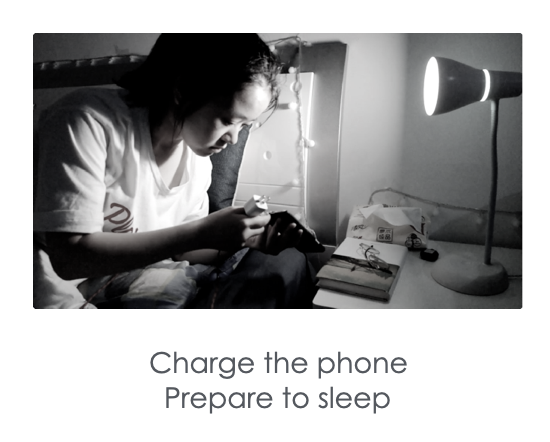
Charge the phone and settle in for the night.
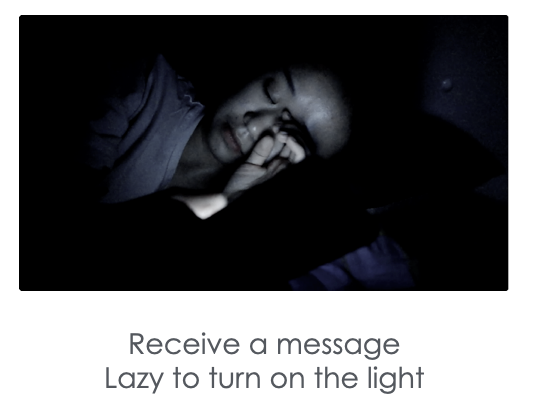
A message arrives, but switching on the main lamp feels disruptive.
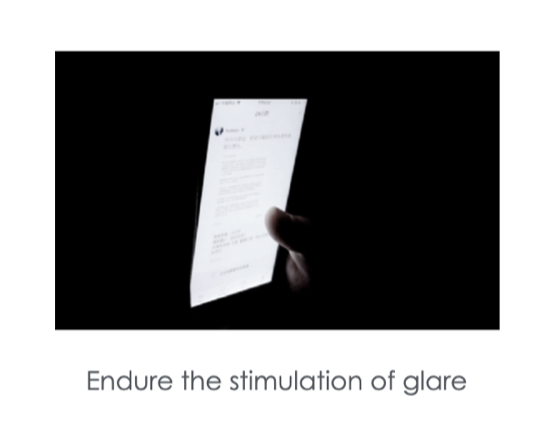
The bright screen becomes the only light in a dark room.
03 · Journey map
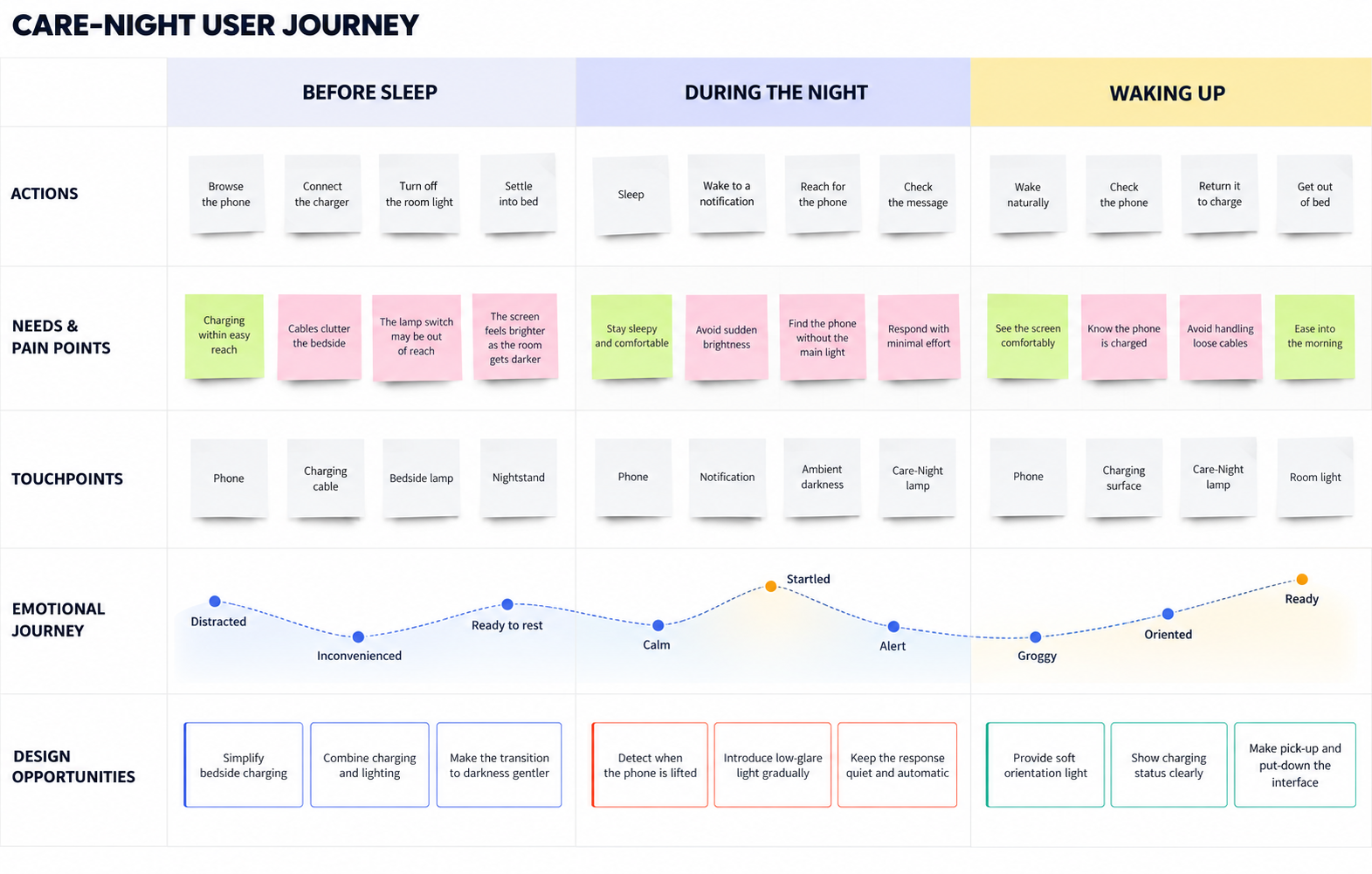
Mapping the routine made three separate frictions visible: the phone needed a convenient charging place, the lamp was often out of reach, and a dark room amplified the screen’s glare.
04 · Product opportunity
Reduce the contrast between a bright phone screen and a dark bedroom.
Use an action people already perform instead of introducing another switch.
Give the phone a clear bedside home without adding another cable to the routine.
05 · Concept direction
Care‑Night combines wireless charging with ambient-light sensing. When the phone is lifted in a dark room, the lamp gradually illuminates; placing the phone back restores a calm resting state.
Lift the phone.
Let the light follow.
06 · Interaction storyboard
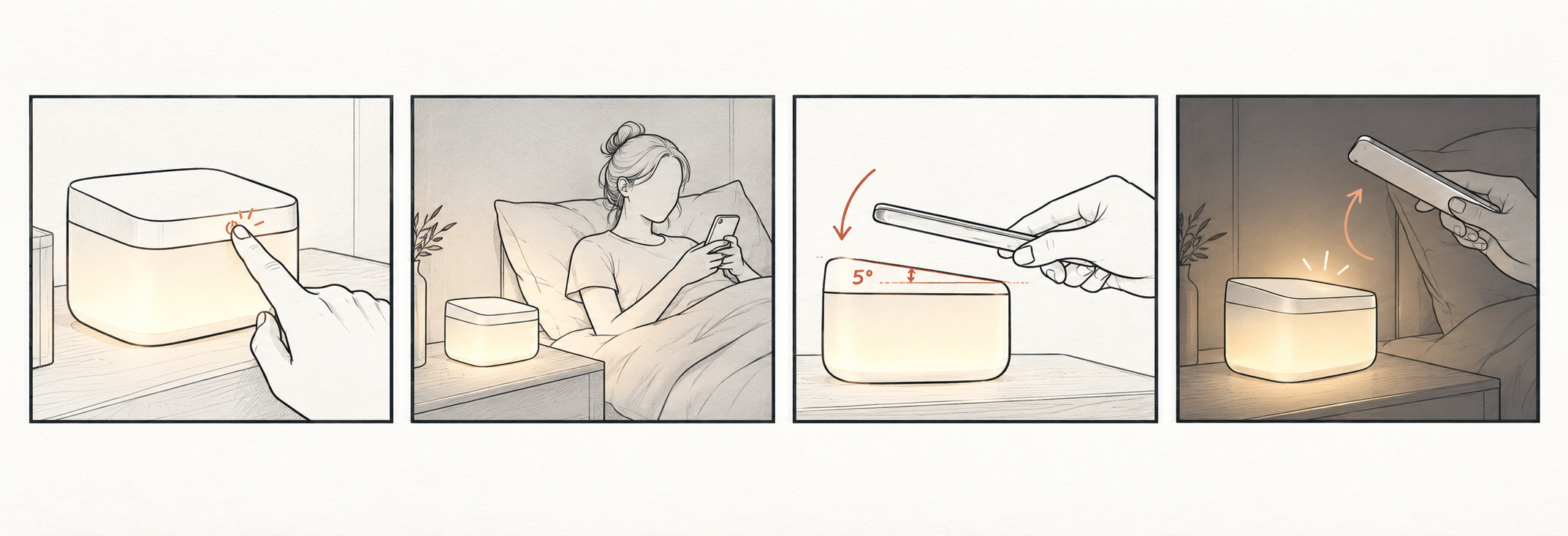
Tap the front control whenever you need immediate bedside light.
In darkness, Care‑Night shifts to a softer, low-glare level.
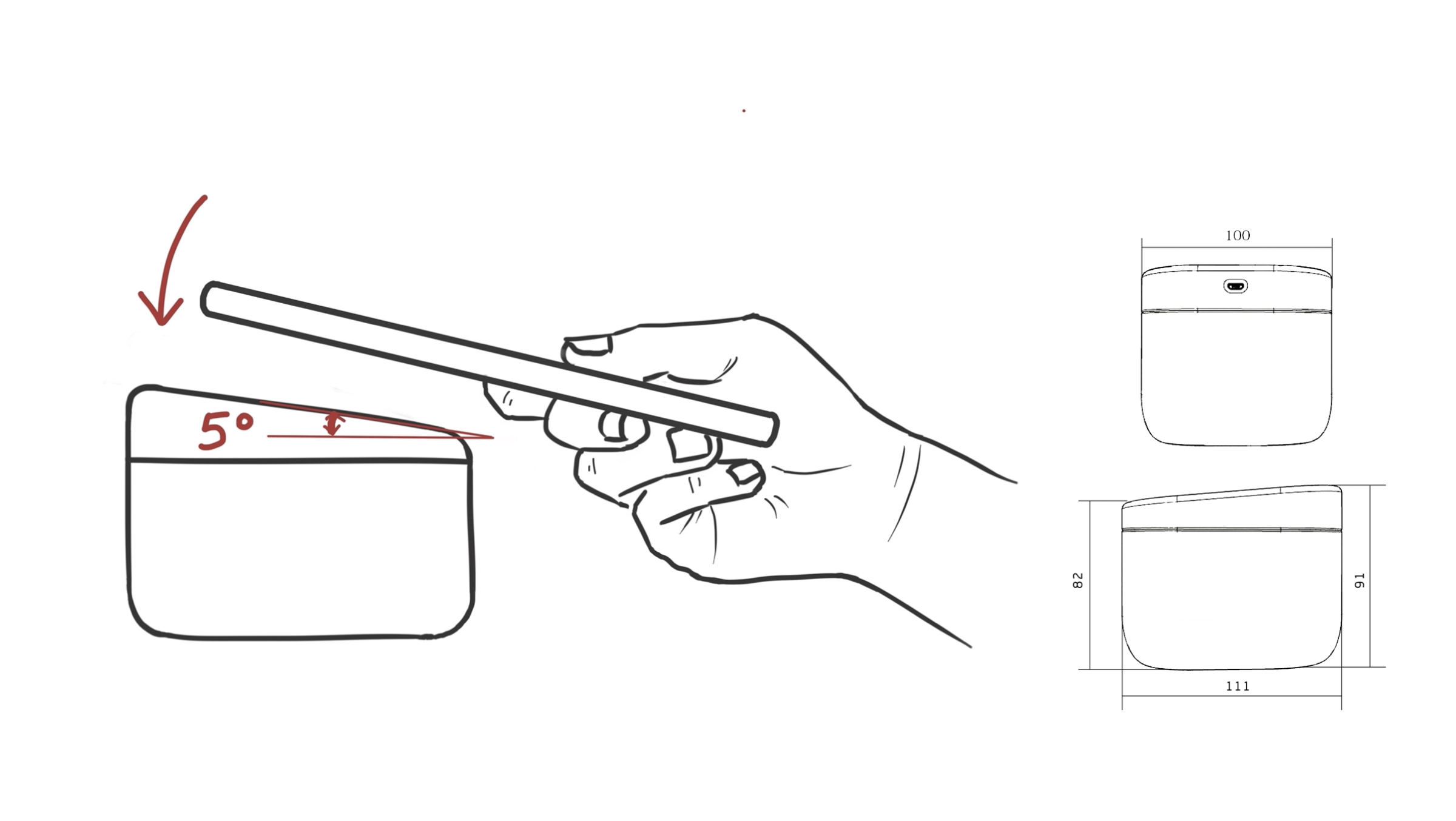
The five-degree surface makes phone placement natural and stable.
NFC sensing lets the lamp react when the phone is lifted or returned.
07 · Product system
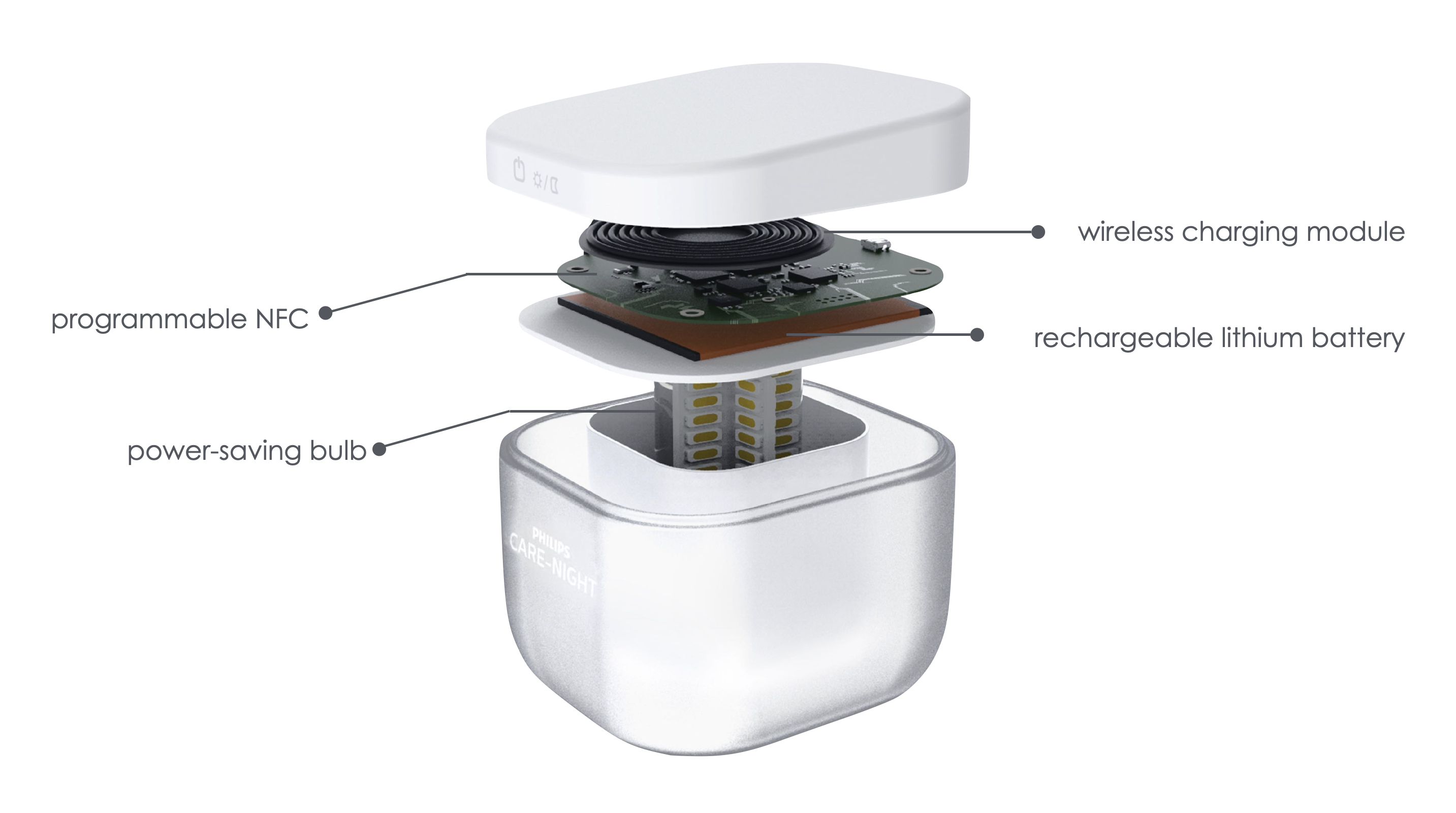
Move across the product to reveal how charging, sensing, stored power, and soft diffusion work together.
Hover or focus a point to explore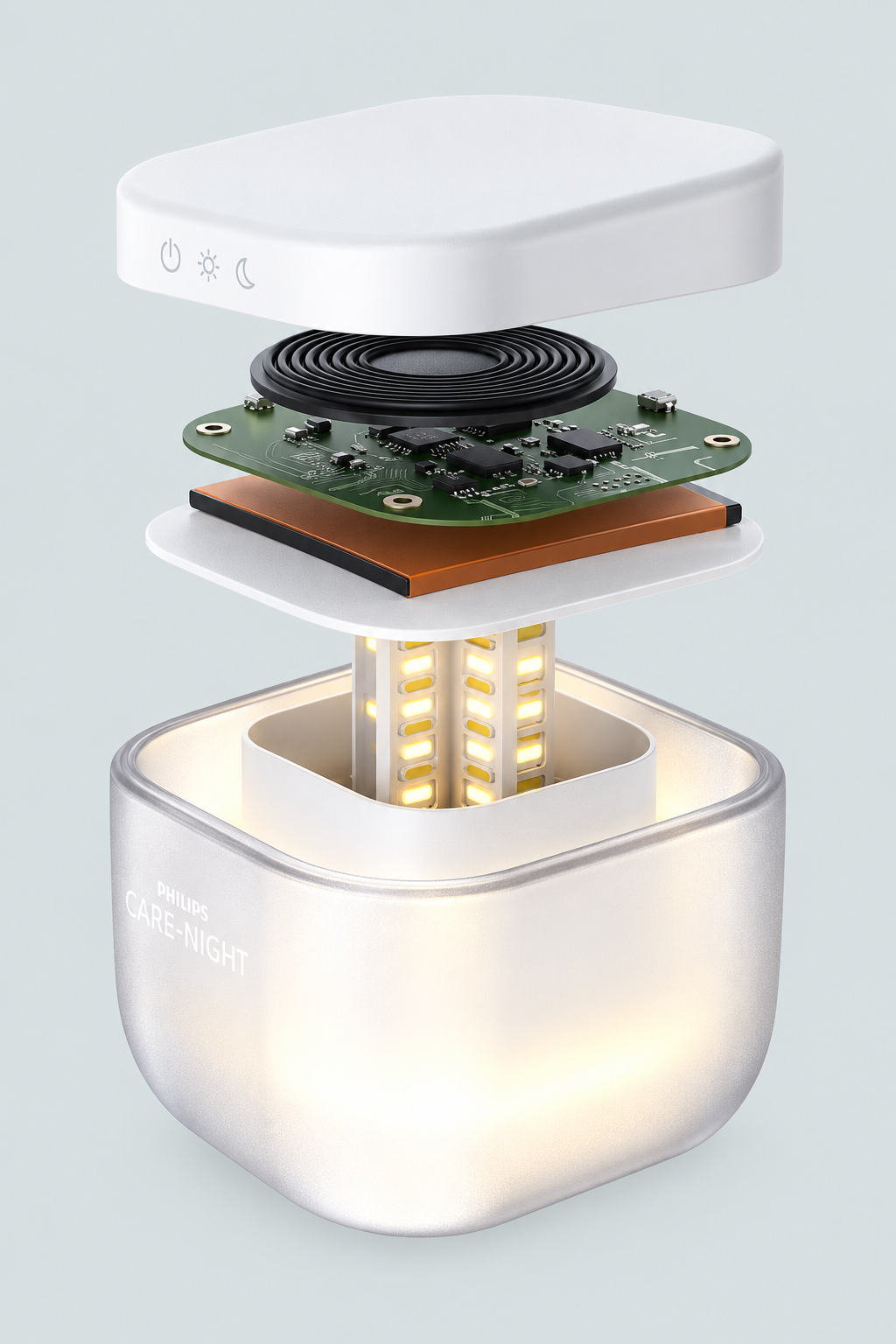
07 · Product system
A five-degree top surface supports natural phone placement. Inside, the concept combines charging, sensing, stored power, and a diffused low-energy light source.
Detect whether the room is dark before responding.
Turn the top surface into a natural resting place for the phone.
Use a frosted translucent body to spread low, comfortable light.
08 · Outcome & reflection
The proposal received second prize, with judges highlighting its user-centered starting point and interaction concept. It was not developed for production: wireless charging was still relatively new, and the estimated component cost exceeded the competition’s target product range.
The lasting lessonA compelling interaction is only one part of product viability. The next version would begin with cost, manufacturing, thermal performance, and charging standards—not add them after the form was resolved.