Clinical Holter
Reliable information, but ten electrodes, cables, a separate recorder, and multiple hospital visits disrupt daily life.
Accurate · difficult to live withHealthcare · Hardware + App · 2021–2022
Making medical monitoring easier to live with.
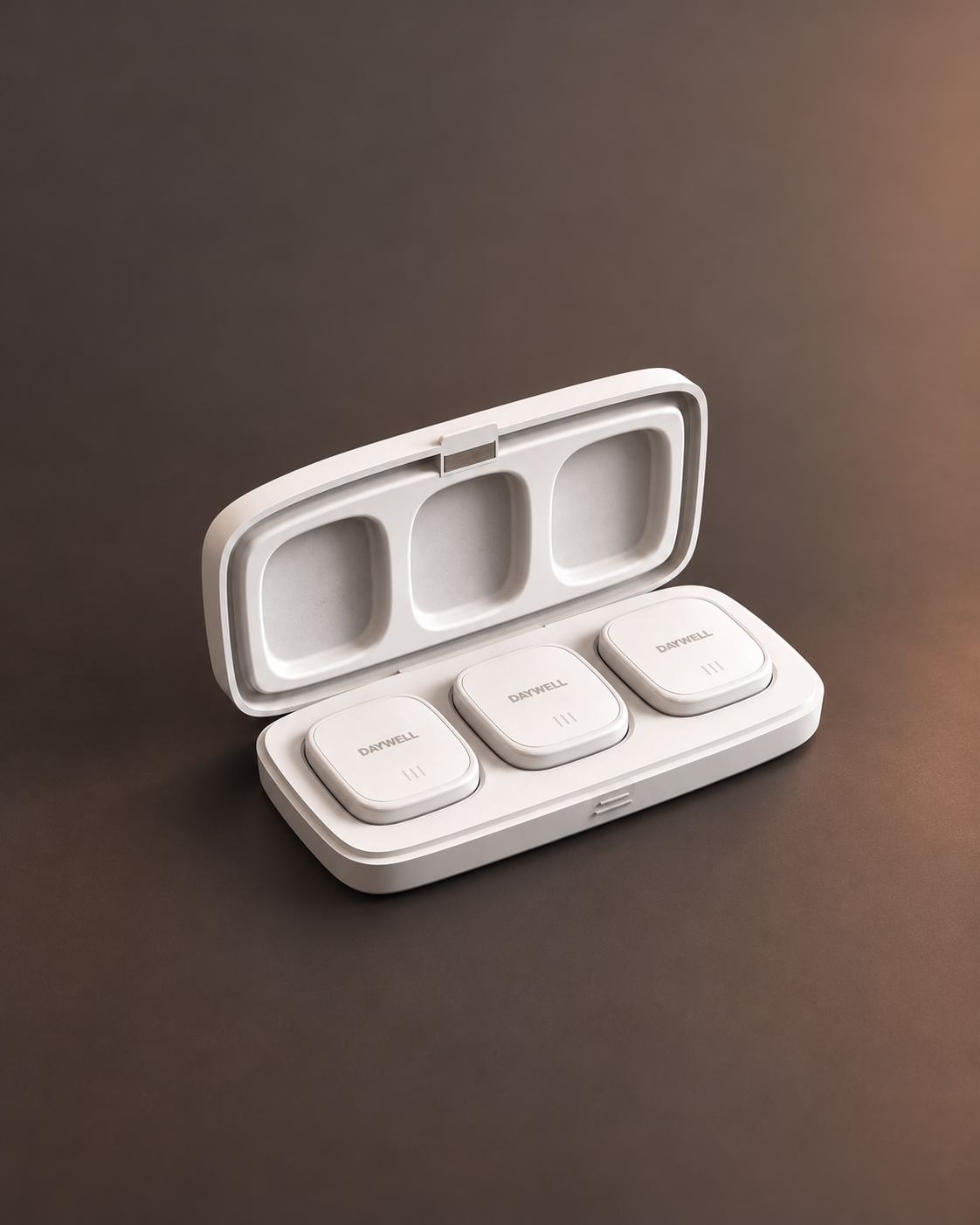
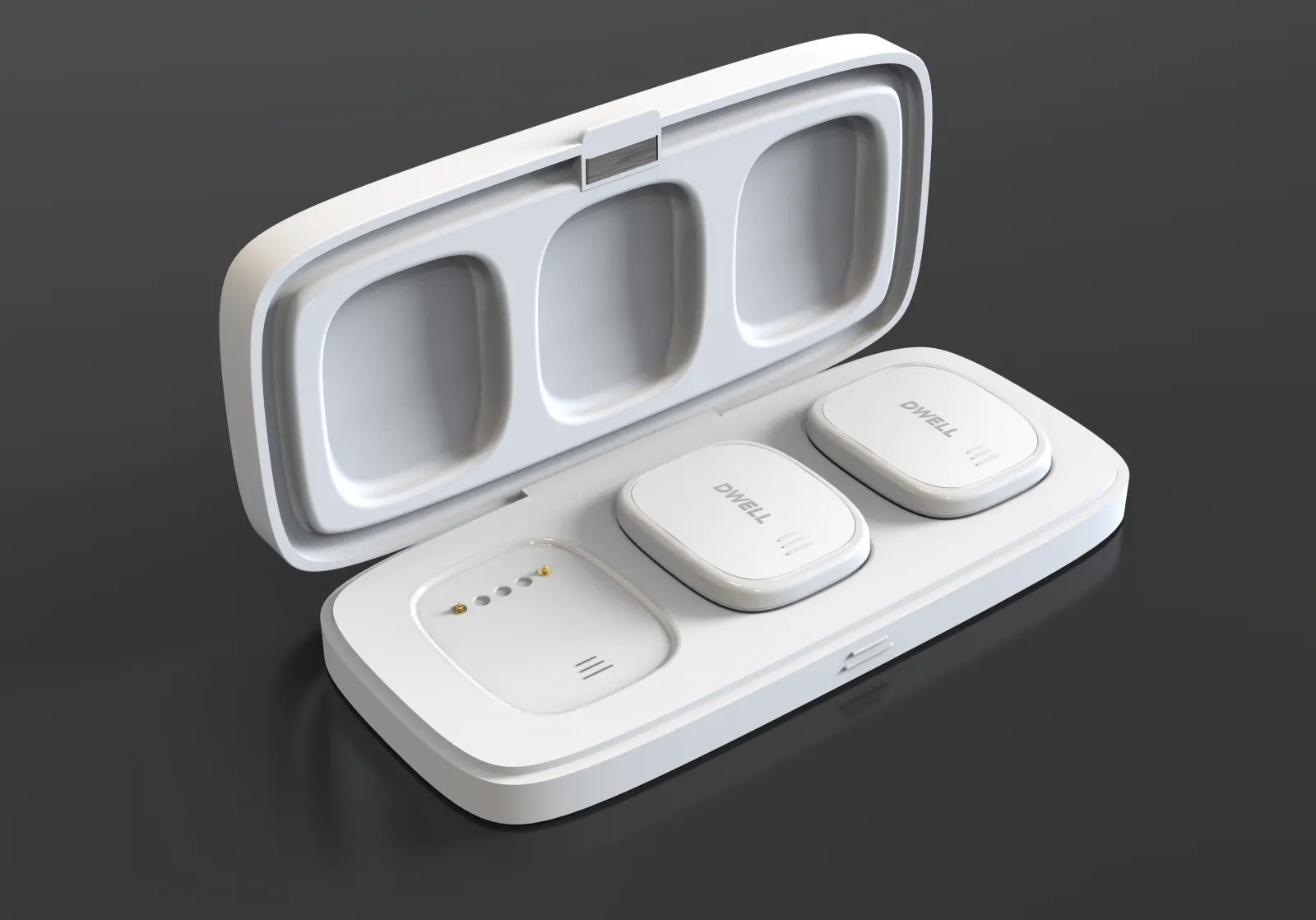 Three nodes · wireless monitoring · one mobile experience
01 · The opportunity
Daywell explored how a wireless multi-lead ECG system could make longer-term monitoring more comfortable, portable, and easier to operate outside the hospital.
02 · Market gap
Reliable information, but ten electrodes, cables, a separate recorder, and multiple hospital visits disrupt daily life.
Accurate · difficult to live withMore wearable, but one channel provides limited information for locating and diagnosing an issue.
Wearable · limited signal contextHandheld devices can capture a short reading, but require active contact and do not support long-term monitoring.
Accessible · momentaryResearch evidence · Persona
Jay represented an urban professional whose symptoms were easy to miss and whose schedule made repeated hospital visits difficult. His story kept the team focused on access, reassurance, and everyday usability.
Original project artifact · retained from the 2021 research phase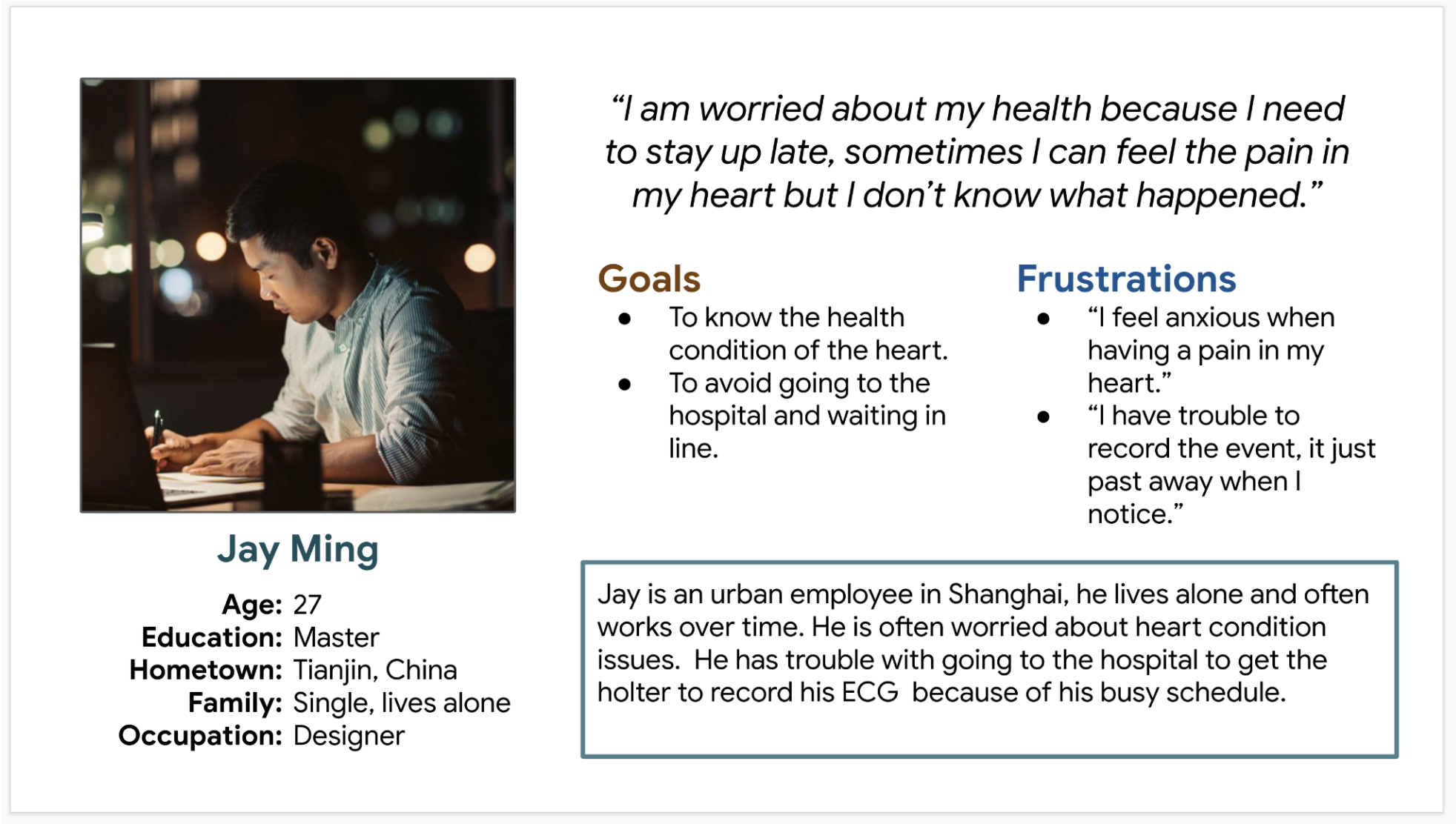
03 · User research
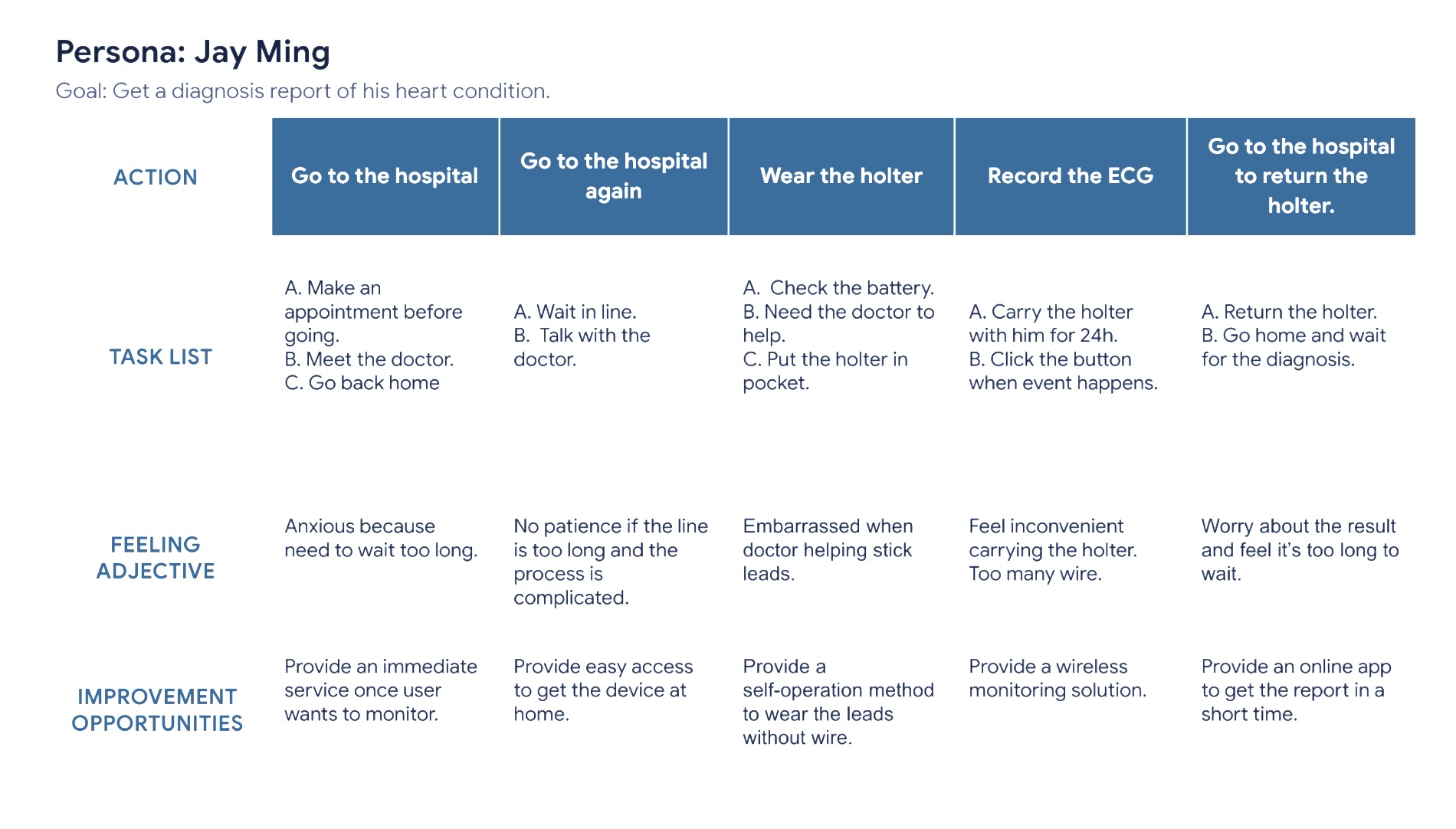
The research focused on people concerned about their heart health but constrained by long working hours, hospital access, and the practical burden of conventional monitoring.
“I need to understand what happened — without turning monitoring into another full-time task.”
04 · Product system
05 · Pivotal decision
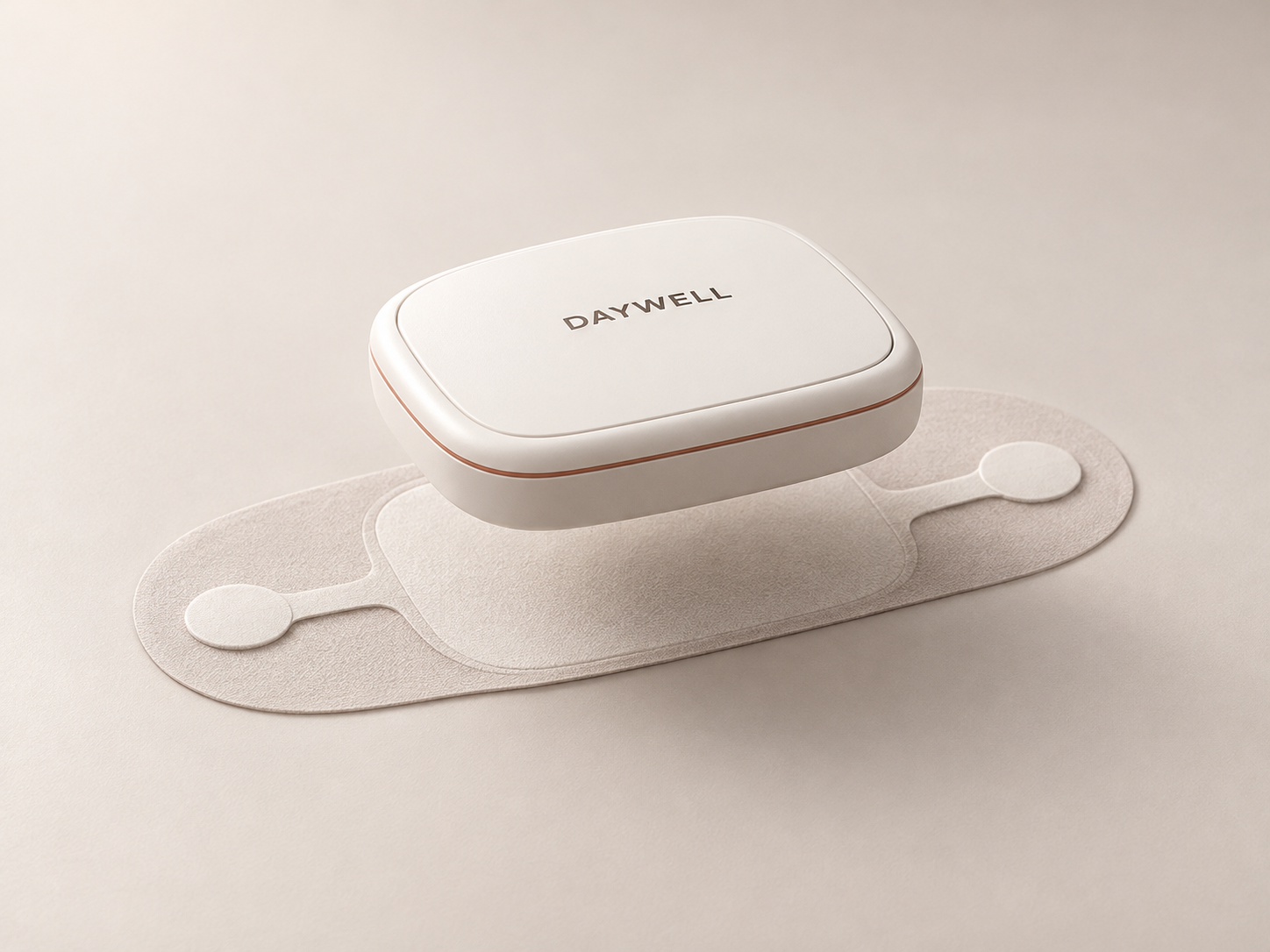
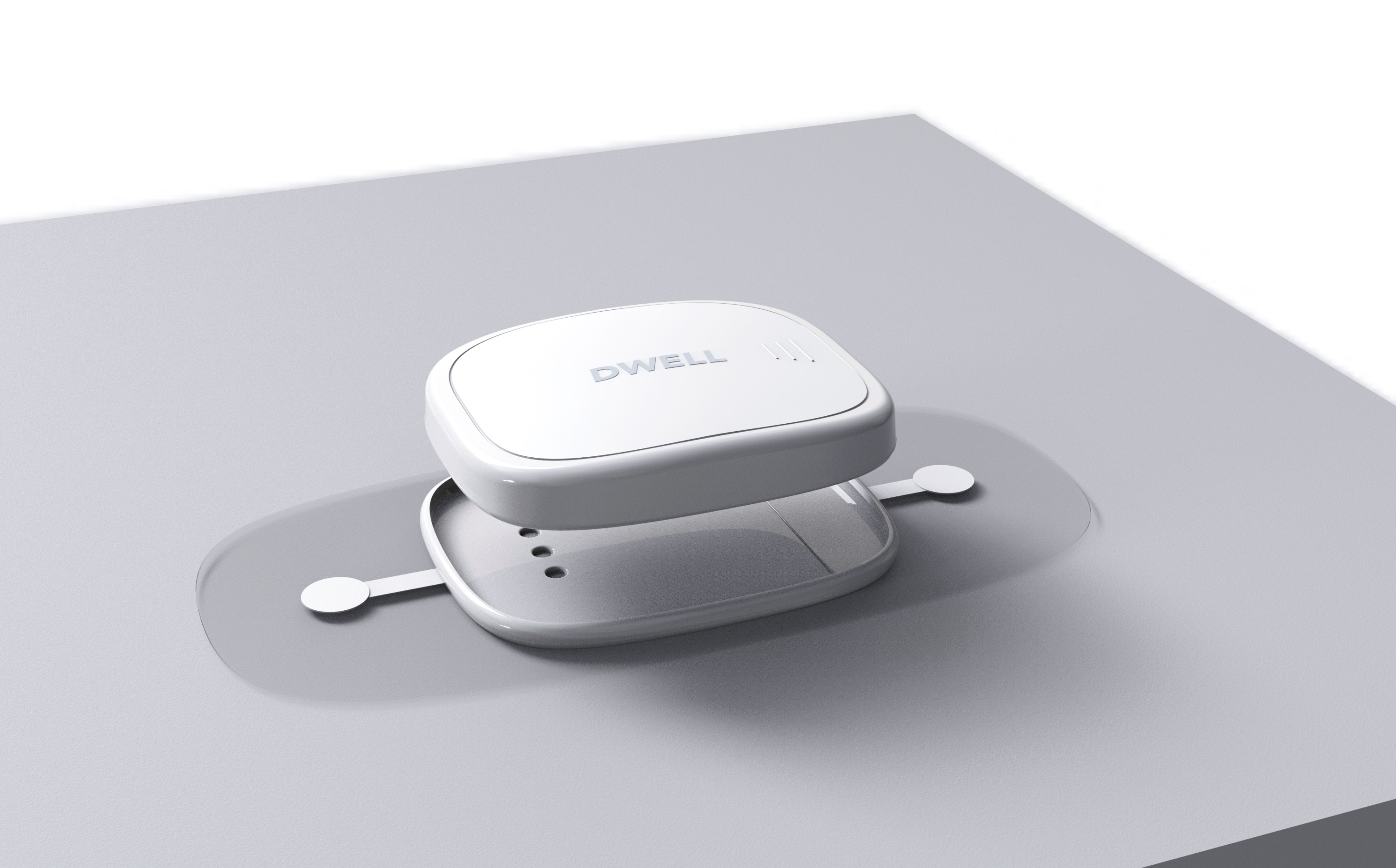
The initial concept stored three nodes and a dedicated host in a charging case. It worked functionally, but portability suffered.
The redesign reduced volume, integrated two wing electrodes into each patch, and connected the host node to the phone through Bluetooth.
06 · Mobile experience · Structure
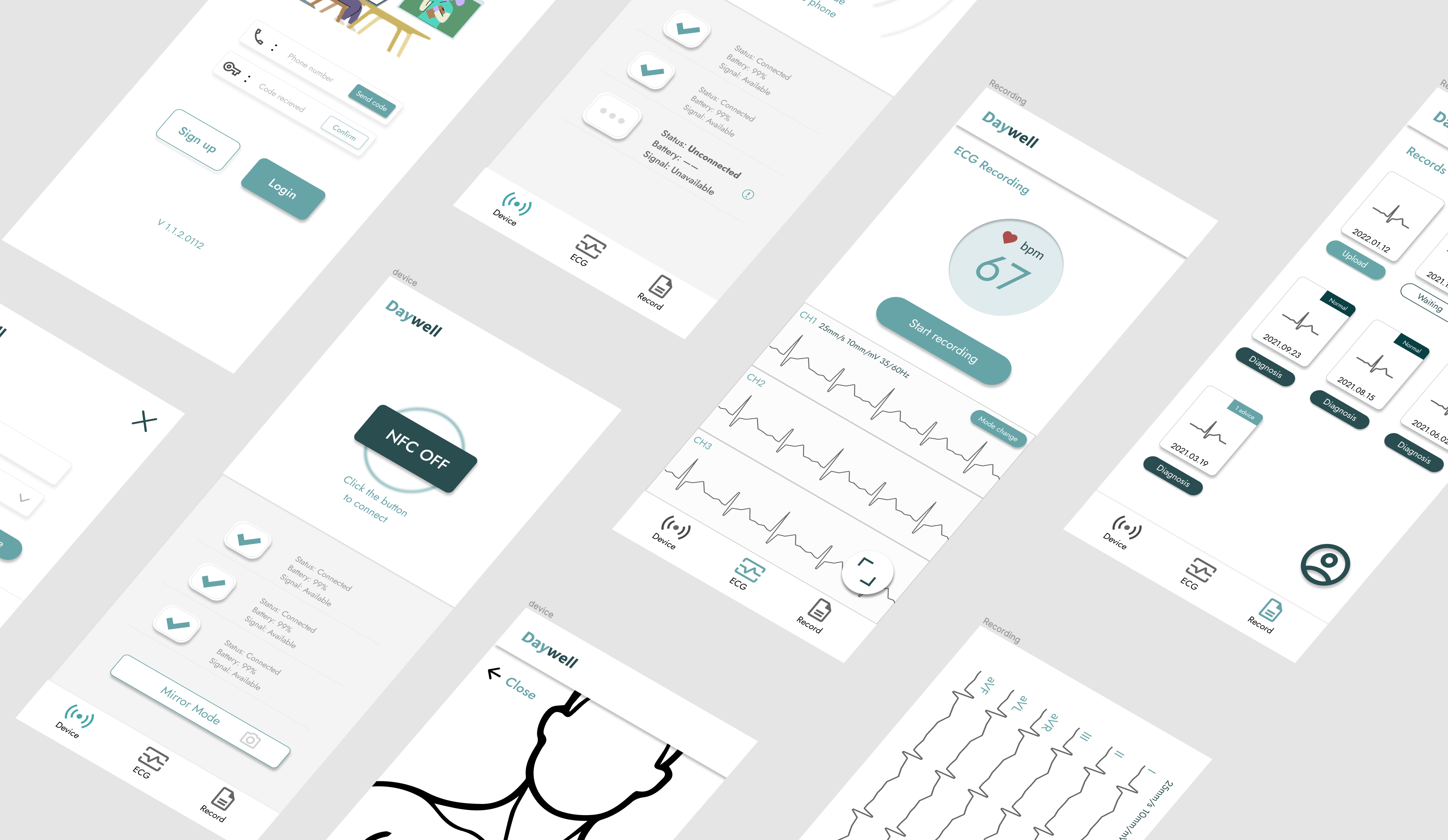
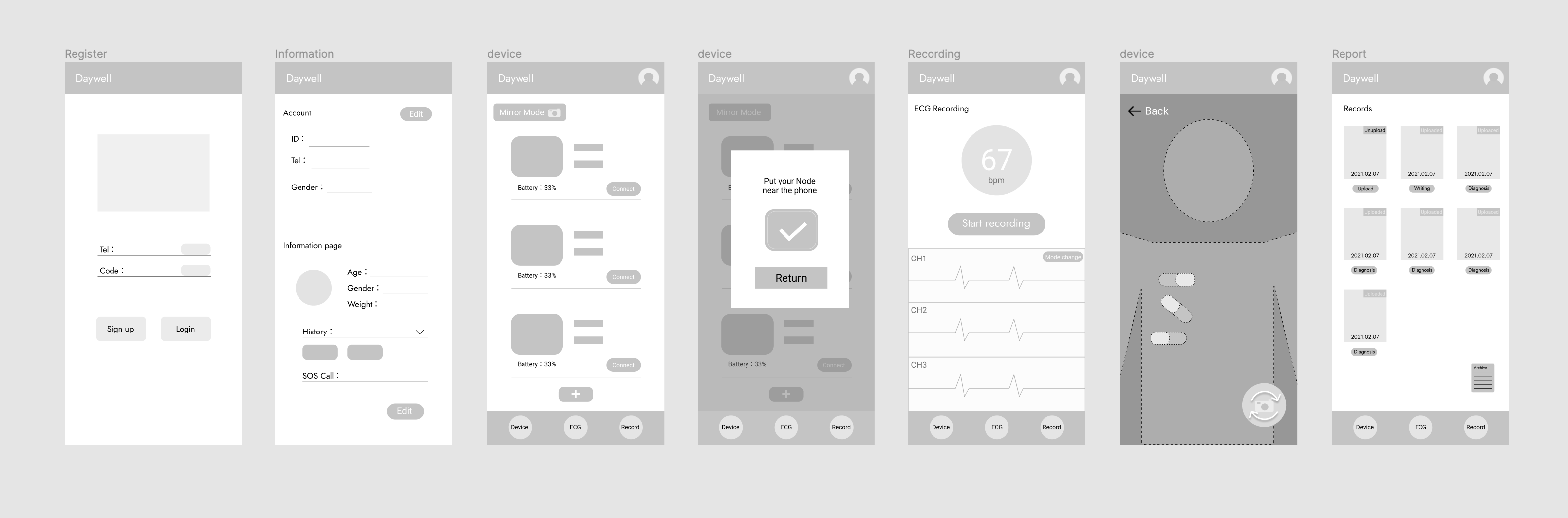
The wireframes established one continuous journey: prepare the account, pair all three nodes, understand placement, record with confidence, and return to a report.
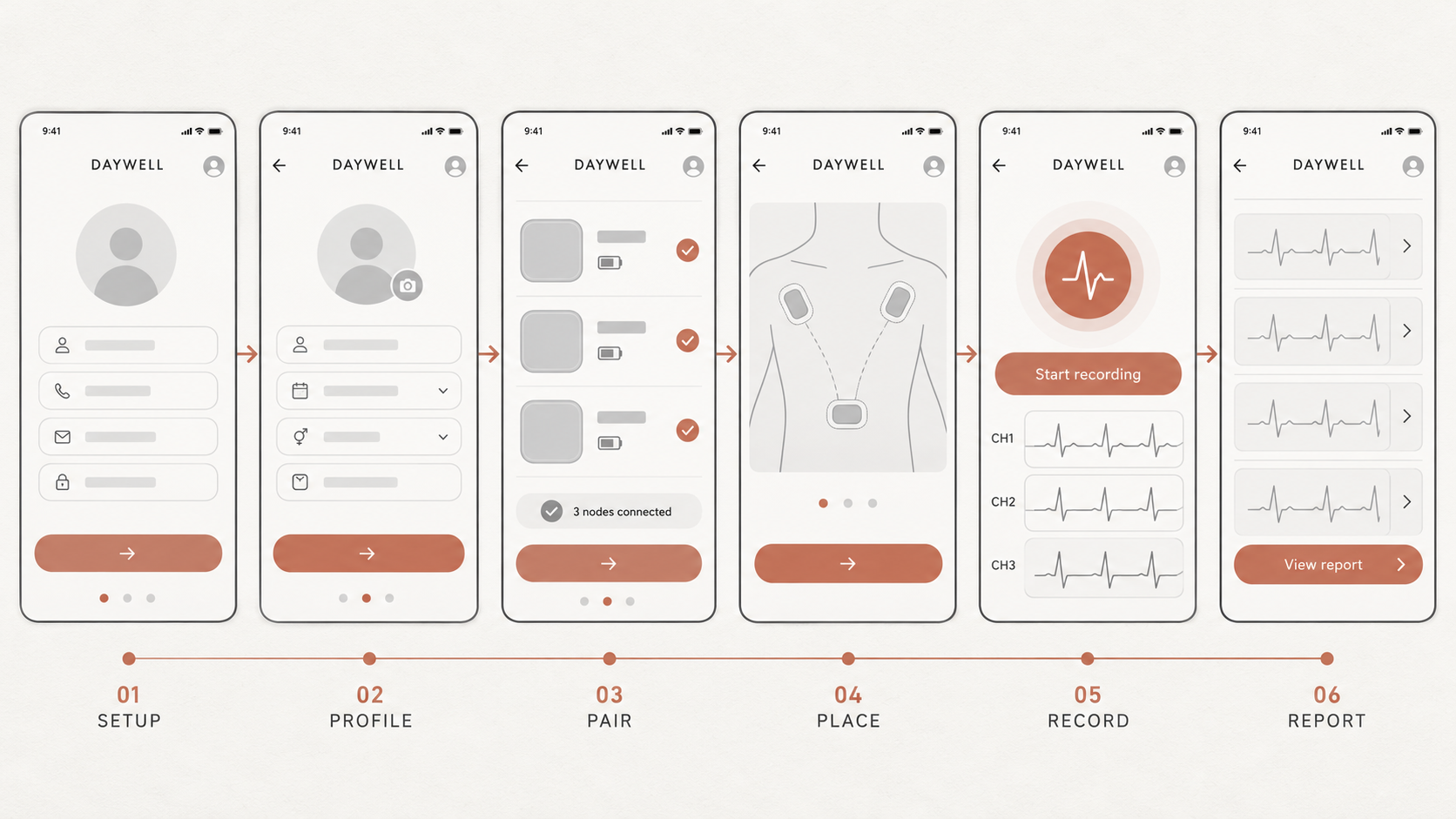
Ask only for what the next step needs.
Make three-node readiness understandable at a glance.
Carry the same mental model from placement to report.
06 · Mobile experience · Prototype
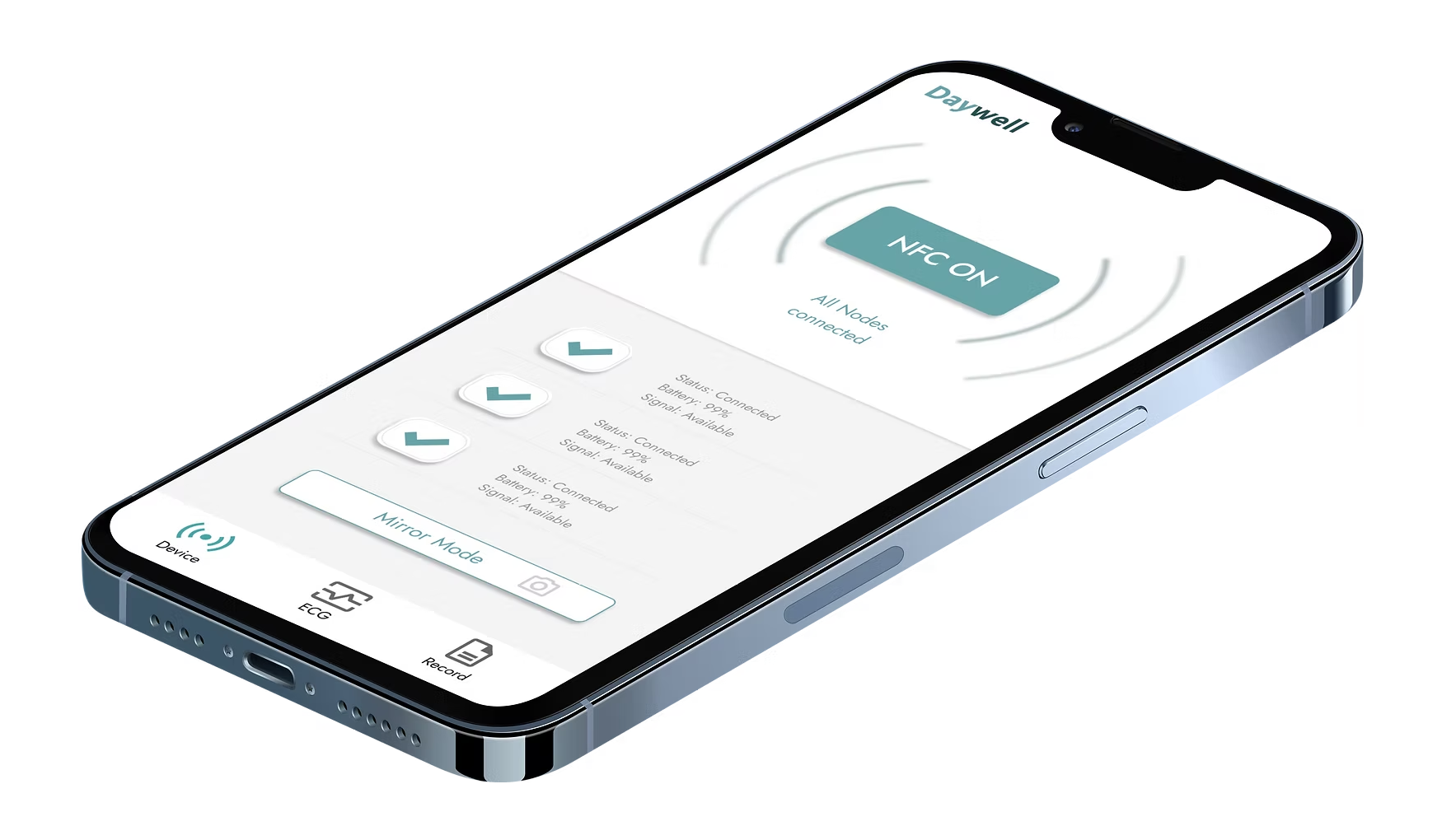
The prototype kept the wireframe architecture, then added clearer connection feedback, focused recording states, and a visual language that makes the medical system feel less intimidating.
06 · Mobile experience · Key interactions
Each interaction answers one practical question: Is everything connected? Can I trust the recording? Where do I find the result?
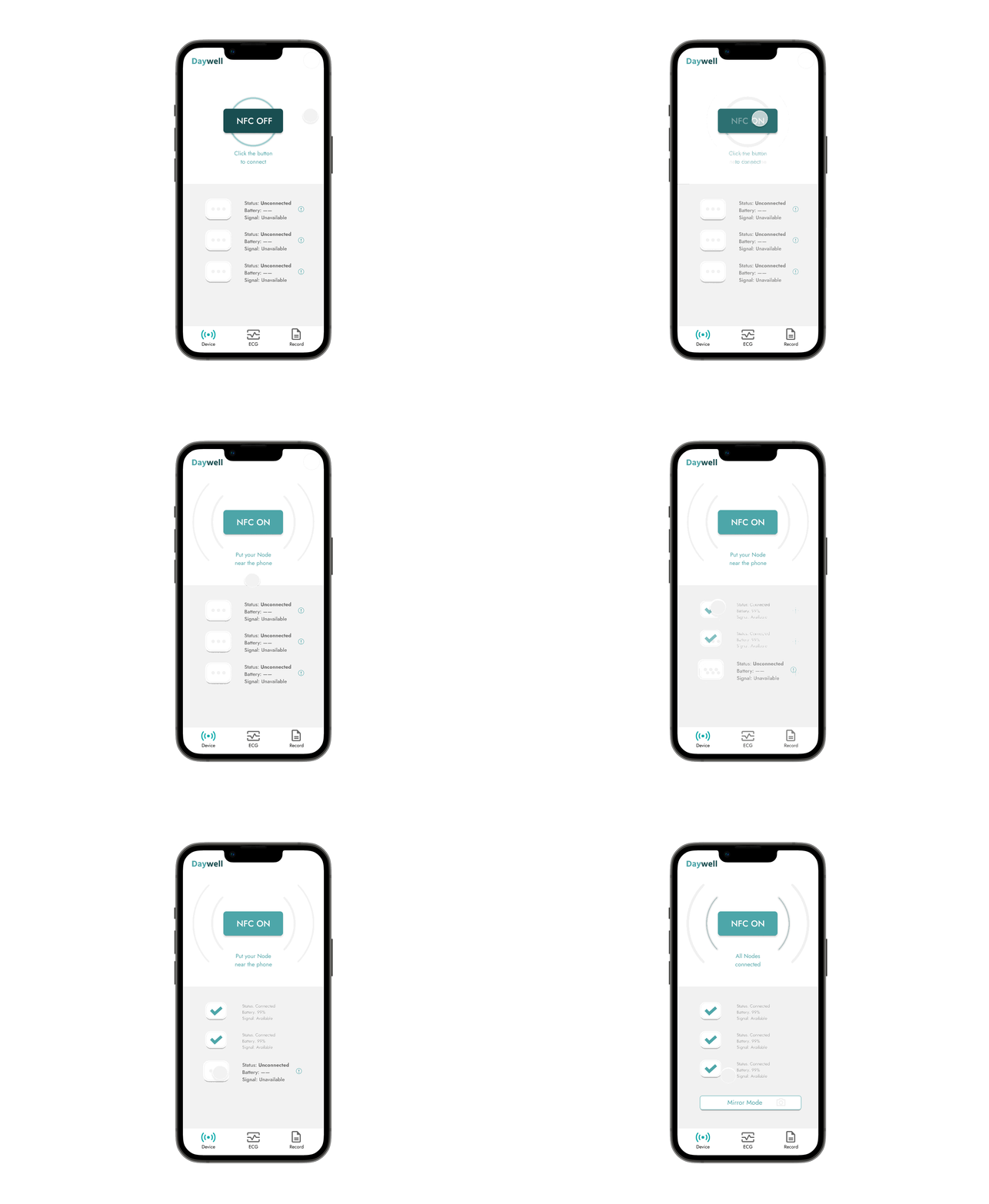
Bring the node close to the phone and confirm all three connections at a glance.
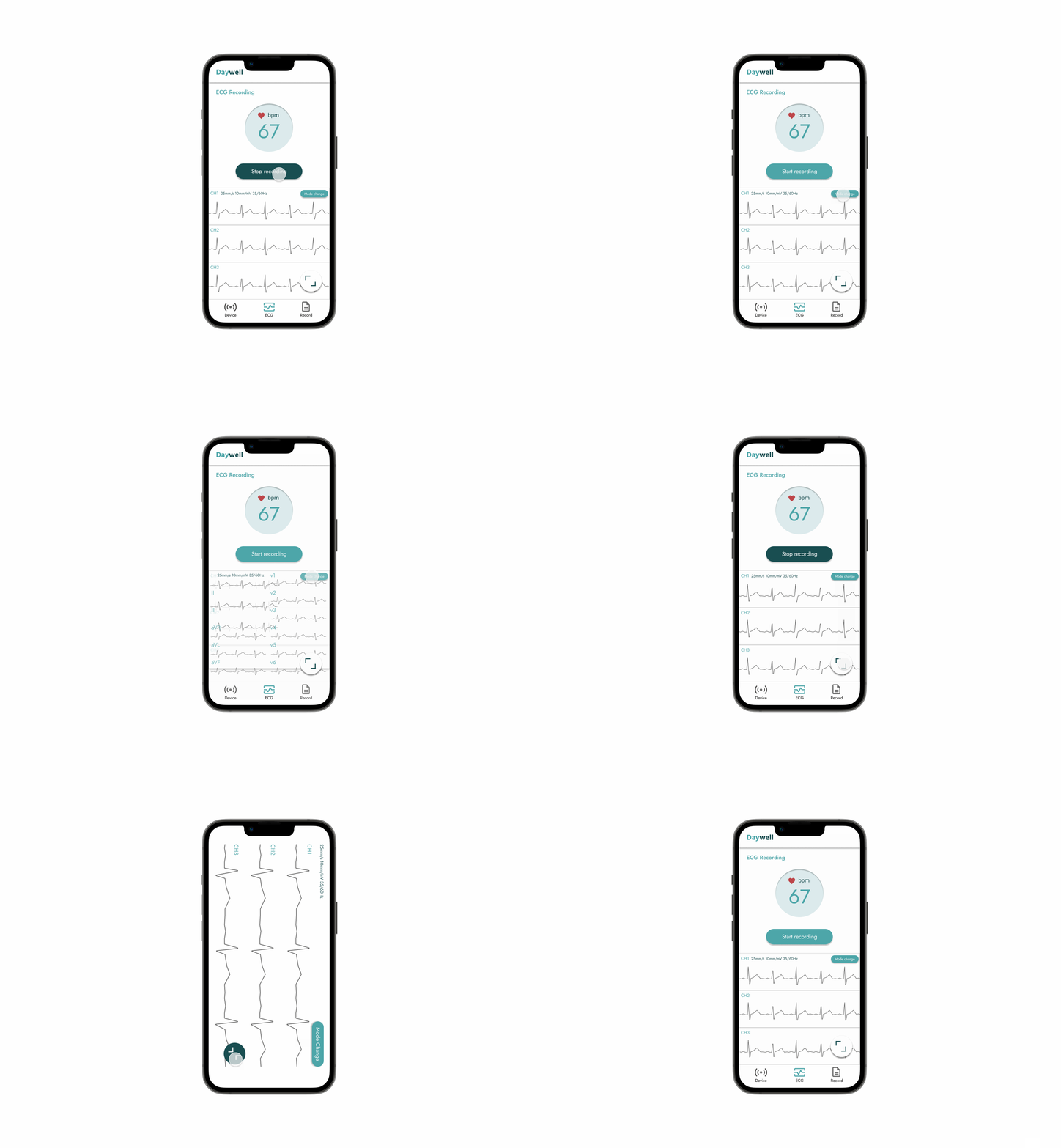
Keep live rhythm, heart rate, and lead switching together in one readable state.
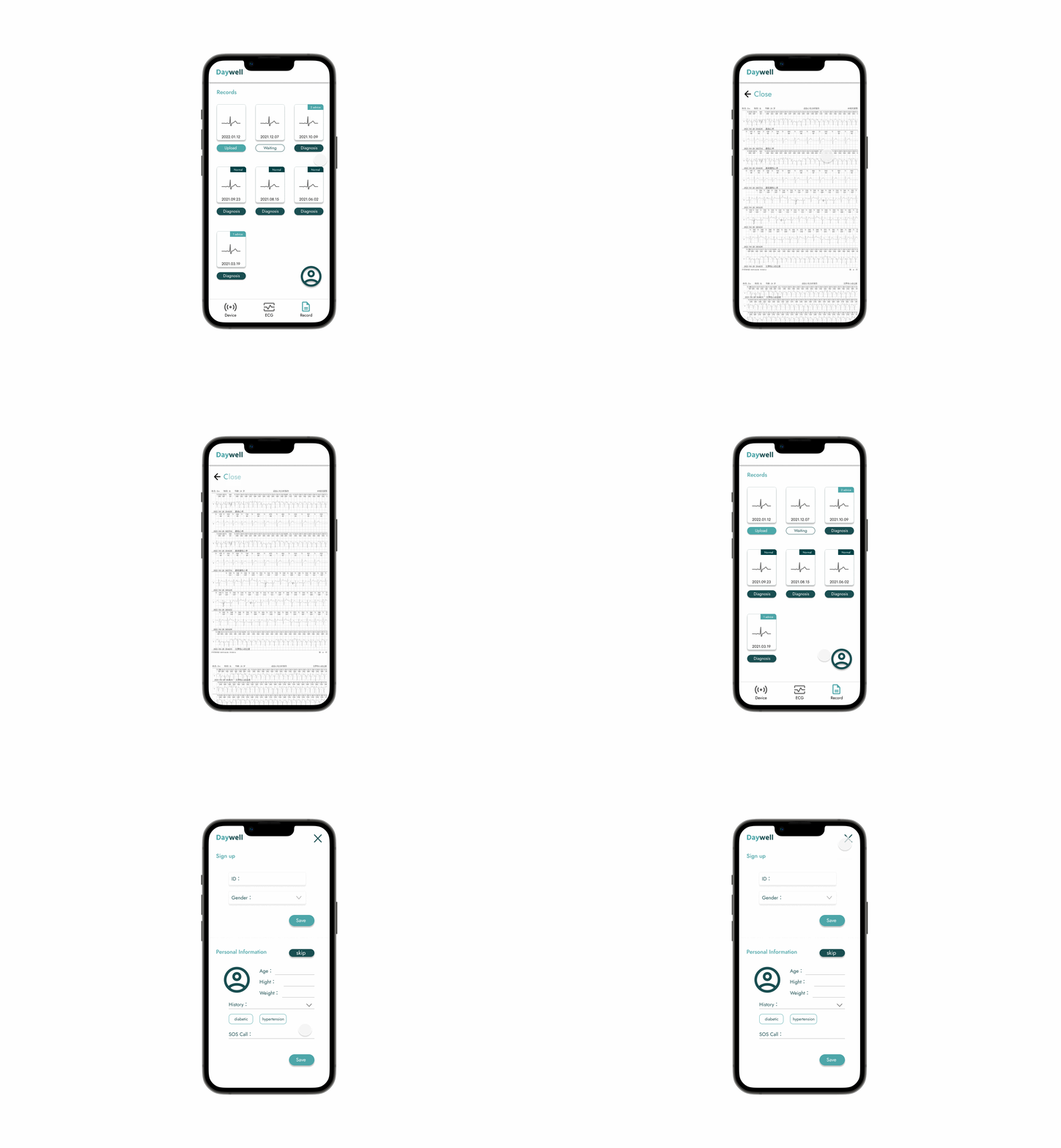
Move from recording history to report status without leaving the product journey.
06 · Mobile experience
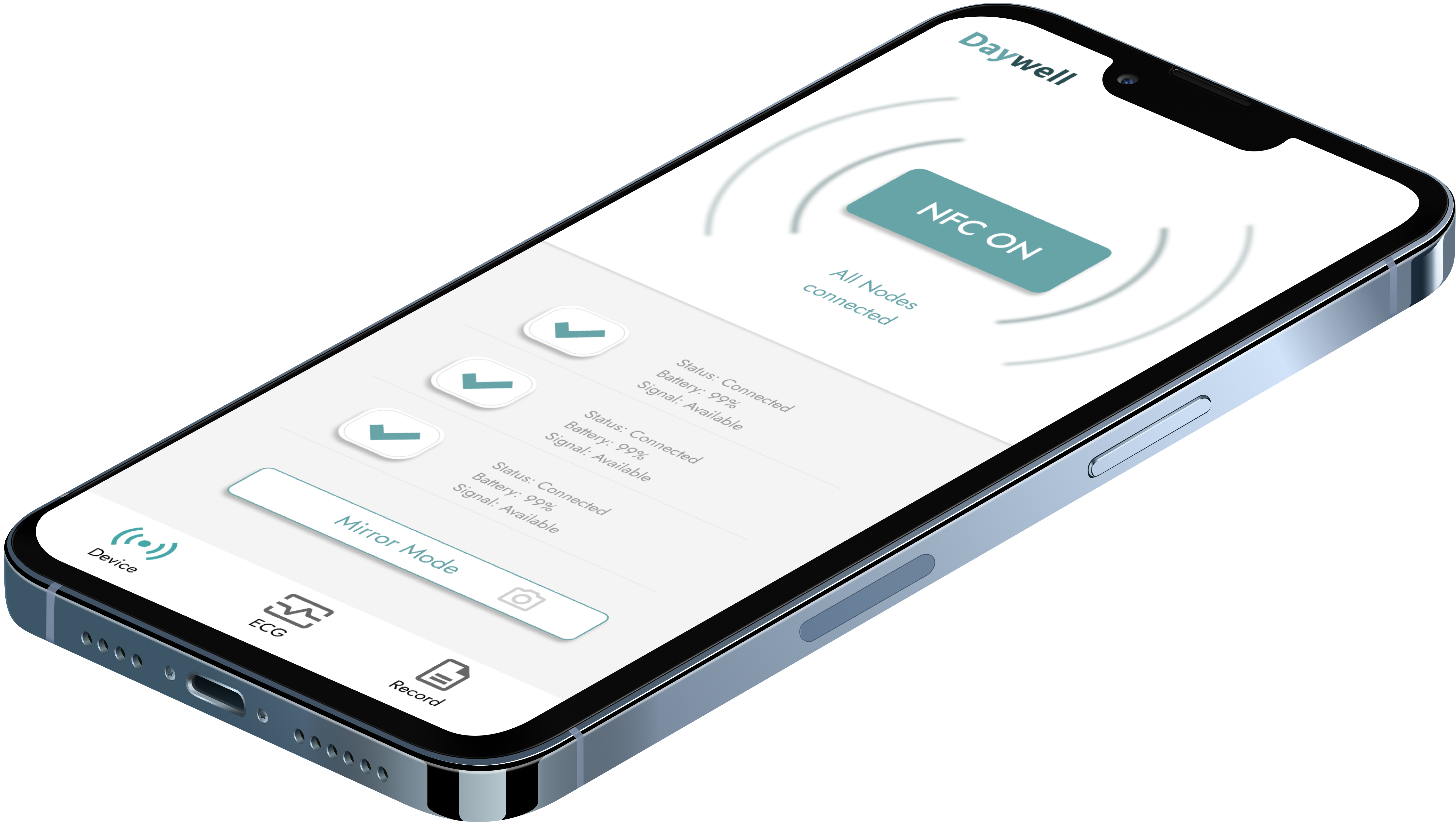
Use NFC to connect the phone with all three nodes with less setup friction.
Move between ECG views while keeping the monitoring session understandable.
Bring recording history and diagnosis reports into the same mobile flow.
07 · Usability signal
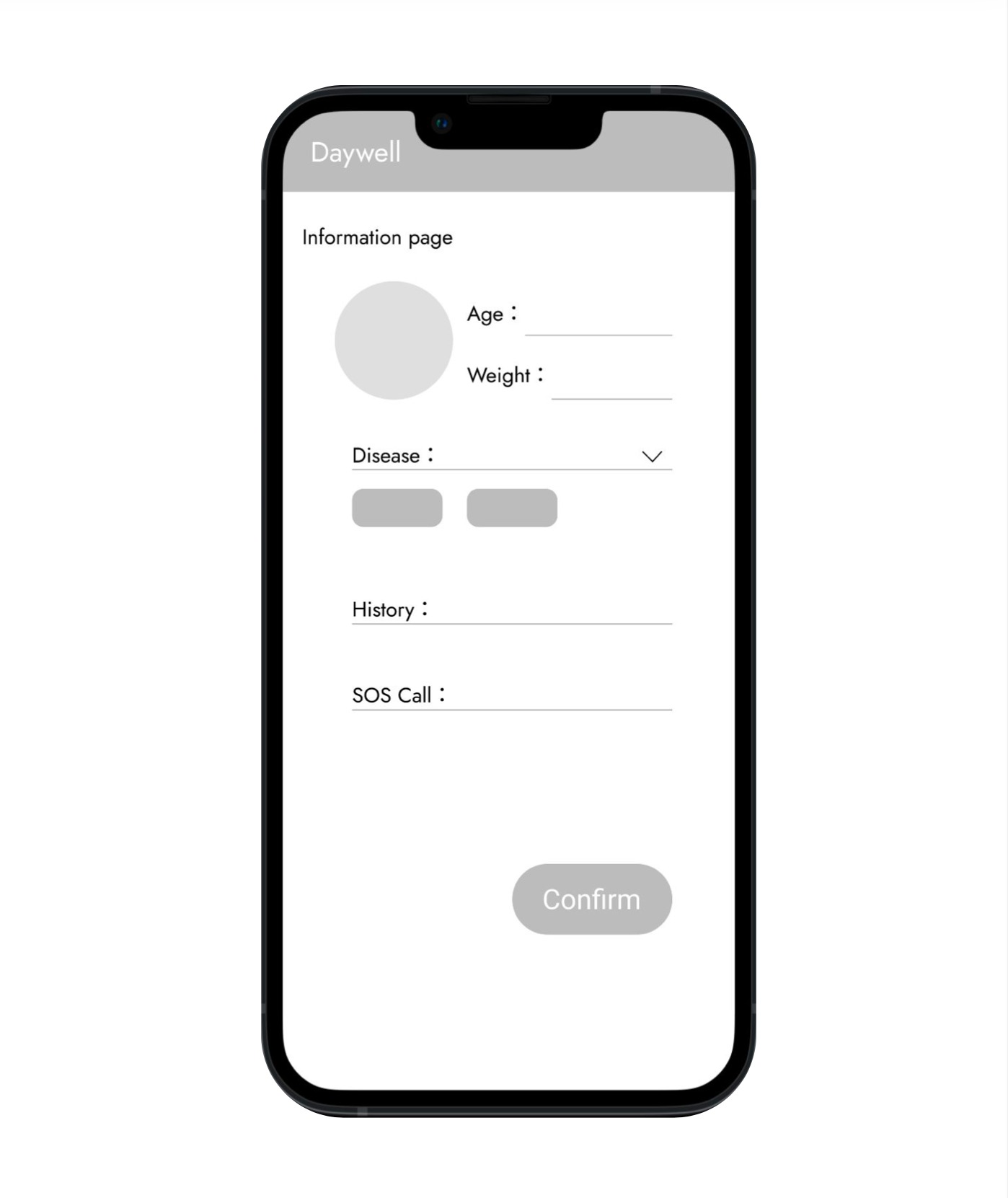
In a five-participant usability study, personal-information requirements created friction during onboarding.
08 · Takeaway
I worked across software and hardware product management, research, industrial design, and UX. The project strengthened my ability to make product decisions across technical constraints and human needs — especially where comfort, clarity, and trust matter.